A first visit to the Museum of Modern Art should begin on the fifth floor, where the collection starts in the 1880s, and descend chronologically — fifth to fourth to third — before ending in the Abby Aldrich Rockefeller Sculpture Garden on the ground level. The museum at 11 West 53rd Street is open every day from 10:30 a.m. to 5:30 p.m., with Friday hours to 8:30 p.m. and select galleries opening at 9:30 a.m. on weekends for early access, as of June 2026. Three hours covers the collection floors at a first-visit pace; the building's six floors are arranged so that the route doubles back on itself less than it appears to from the lobby.
The museum reopened in October 2019 after an expansion led by Diller Scofidio + Renfro with Gensler that added gallery space and, more consequentially for visitors, reorganized the permanent collection from a department-by-department hang into a roughly chronological sequence spread across the floors. The result rewards the top-down walk: European modernism's founding decades sit at the top, the postwar to the 1970s below them, the contemporary below that, and film, media and performance programs occupy the second floor and the lower levels. Hours and programs below are as of June 2026 and subject to change.
How are MoMA's floors organized?
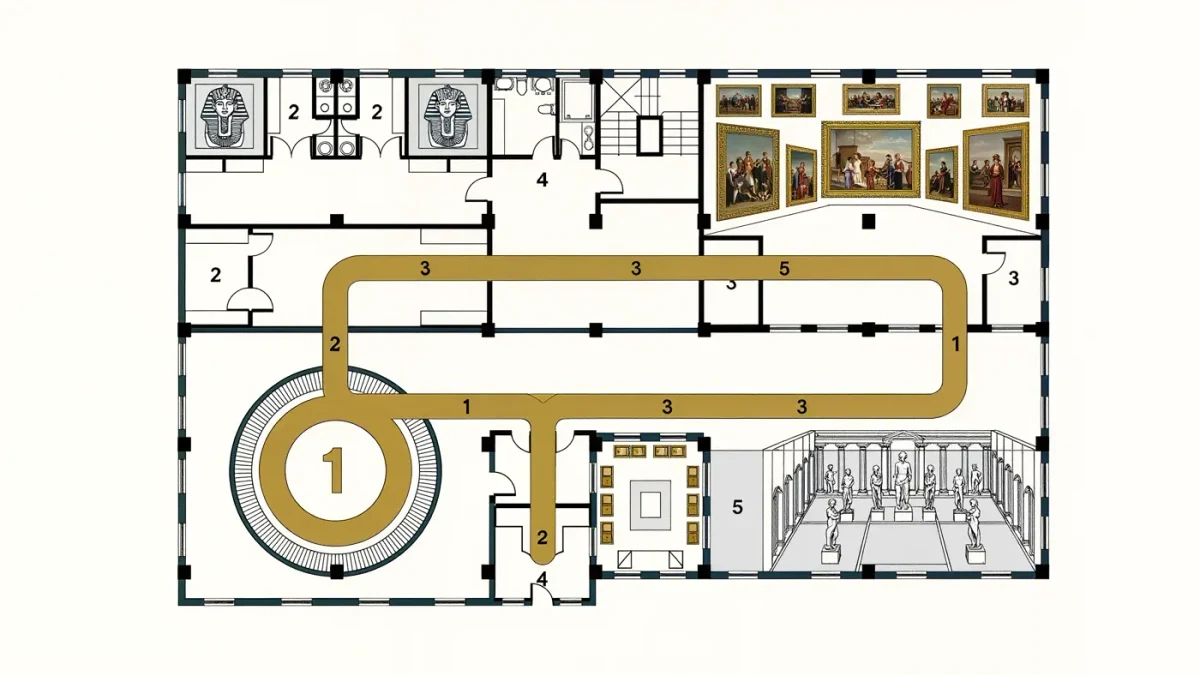
Floors five through three carry the permanent collection in descending chronological order: the 1880s through the 1940s on five, the 1940s through roughly the 1970s on four, and the 1970s to the present on three. The second floor holds contemporary and media exhibitions alongside the film theaters, and the lobby level holds the entrance sequence, the sculpture garden and the shops. The logic is consistent enough that a lost visitor can orient by century: anything prewar is above, anything living is below.
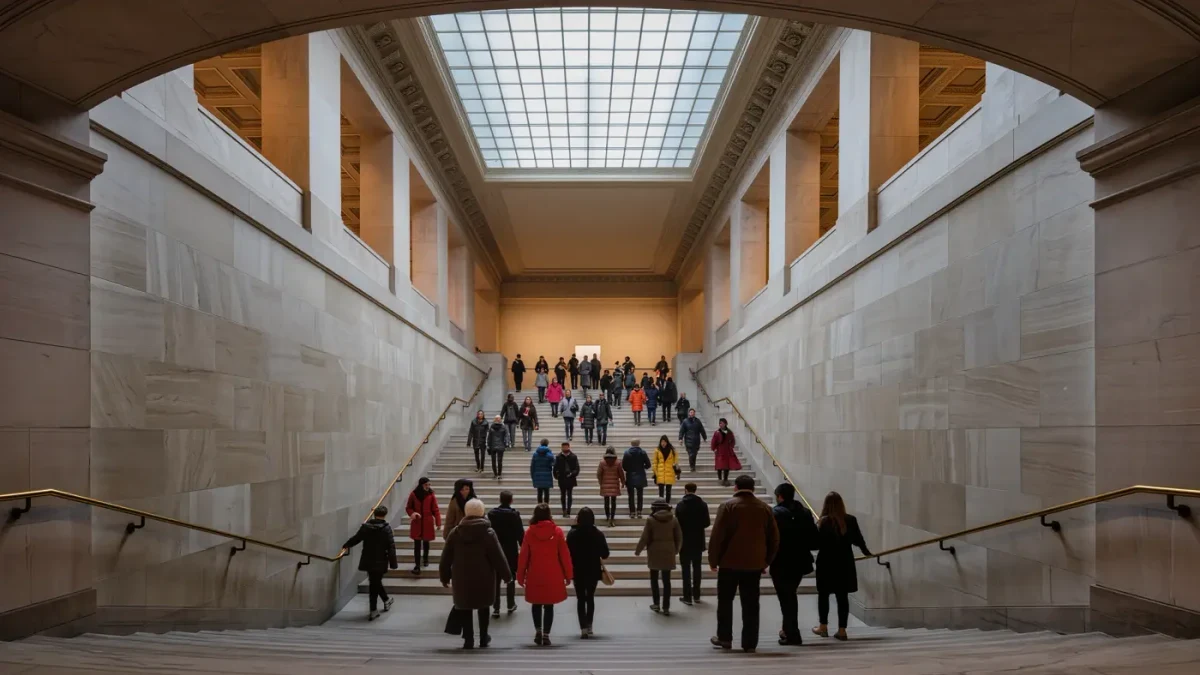
Two structural notes improve the walk. First, the floors are connected by more than one stair, and the elevator lobby on each level is the reliable spine; the escalators serve the lobby-to-second stretch best. Second, the rehang is a living thing — the museum rotates individual galleries within the chronological frame continuously, so the floor logic holds while specific rooms do not. Visitors returning after a few years will find the route familiar and the walls partly new, which is the intended effect.
Which floor should visitors start on?
The fifth. Arriving at the 10:30 a.m. opening, visitors should take the main elevator or escalator bank directly to five and begin with the late-nineteenth-century galleries, letting the collection run forward as the day progresses — Cézanne and the post-impressionists first, then the early modern movements, then the interwar years. The fifth floor is also the museum's most congested by midday, since every tour's itinerary begins there; the 10:30 opening or the weekend 9:30 early-access window are the practical answers.
An alternative suits afternoon arrivals: begin on three, with the contemporary galleries, and ascend rather than descend, saving the modernist icons for the day's last hour when the fifth-floor crowds have begun to thin toward the garden and the exits. Either direction keeps the chronology intact; the error to avoid is floor-hopping by appetite, which the building's size converts quickly into fatigue and missed galleries.
What role does the sculpture garden play?
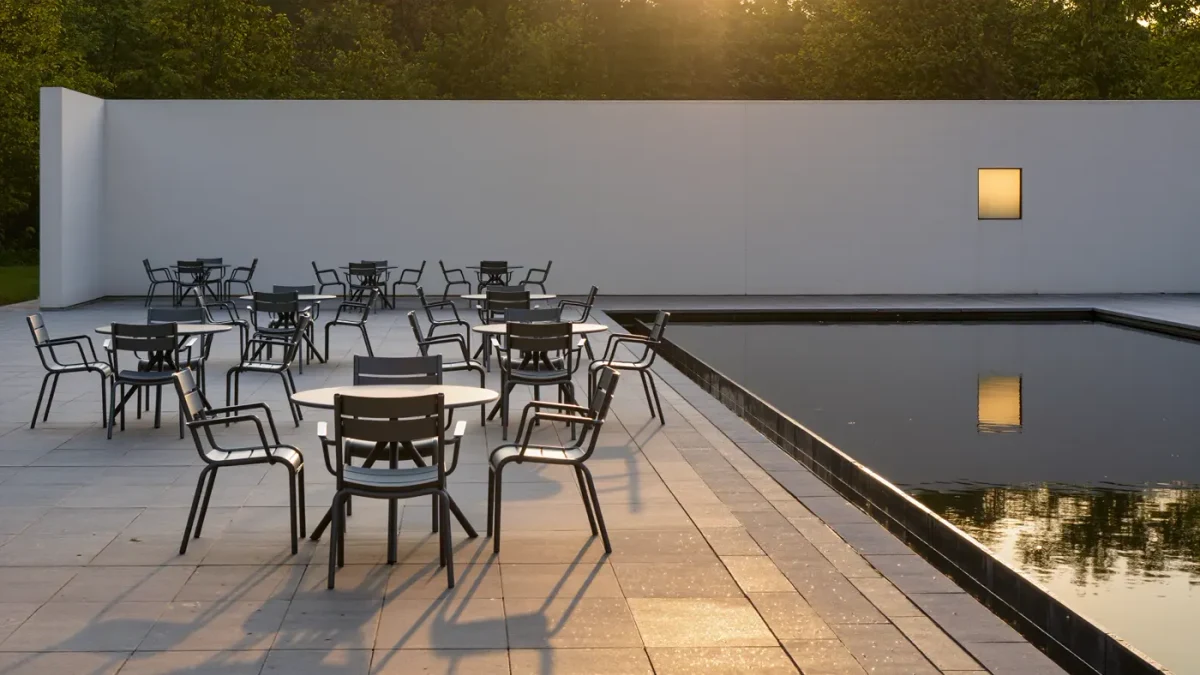
The Abby Aldrich Rockefeller Sculpture Garden, on the ground level, is the museum's relief valve and its most loved room — a rectangular outdoor court of paving, planting and sculpture, ringed by the building's lower floors and animated by the sound of the fountain. In the morning, before the galleries fill, the garden is at its quietest: chairs sit empty in rows, the café tables are unclaimed, and the light comes in low over West 53rd Street. Visitors would do well to schedule twenty minutes of it deliberately rather than treating it as a corridor between wings.
The garden also functions as the visit's midpoint reset on crowded days. Descending from the third floor, the route passes naturally into it; a coffee at the garden café, taken at one of the perimeter tables, restores enough attention for a second ascent to whatever was skipped. In winter the garden stays open and cold; in warm months it is the museum's best-justified reason for the otherwise forgettable ground floor.
When is the museum least crowded?
At the 10:30 a.m. opening on weekdays, and in the mid-afternoon lull between 2 and 4 p.m.; the weekend early-access window from 9:30 to 10:30 a.m., which opens select galleries before general admission, buys the same quiet at the cost of a partial building. Friday evenings, though the museum runs to 8:30 p.m., draw a post-work crowd that concentrates on the collection floors; Saturday is the heaviest day overall, and holiday weeks behave like Saturdays throughout. Timed entry smooths the worst of the peaks, and buying ahead is the single step that most improves a first visit.
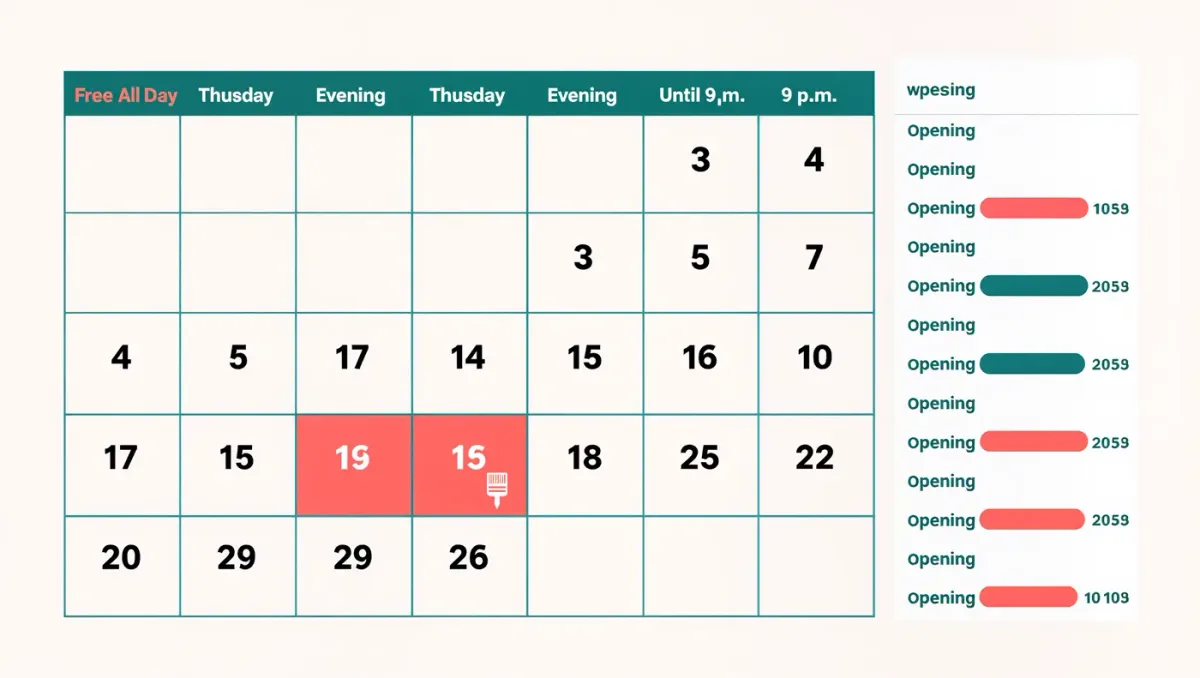
| Period | Hours (as of June 2026) | Character |
|---|---|---|
| Monday to Thursday | 10:30 a.m. to 5:30 p.m. | Quietest at opening |
| Friday | 10:30 a.m. to 8:30 p.m. | Busy evenings |
| Saturday, Sunday | 10:30 a.m. to 5:30 p.m. | Early access 9:30 to 10:30 a.m., select galleries |
How long does a first visit take?
Three hours for the collection floors at a disciplined pace, four with the special exhibitions and the garden seated properly. A one-hour visit is survivable and even coherent if confined to the fifth floor and the garden — the museum's argument in miniature — and visitors with two mornings available should split modernism from contemporary rather than doubling a single day. The film and performance schedules, posted on the museum's site, occasionally justify planning the whole visit around a screening, since the theaters sit conveniently close to the exit sequence.
Neighborhood pairing is straightforward: the museum sits mid-block between Fifth and Sixth Avenues, a five-minute walk from Rockefeller Center and the Channel Gardens, and a fifteen-minute walk south of the Museum of Arts and Design at Columbus Circle. The B, D, F, M to 47th–50th Streets and the E, M to Fifth Avenue–53rd Street serve the block directly, with the 1 and the A, B, C, D a short walk west.
Can MoMA be combined with MoMA PS1?
Yes, on a weekend, and the pairing is the institution's own design: MoMA PS1, the contemporary affiliate in a converted Long Island City schoolhouse at 22-25 Jackson Avenue in Queens, runs afternoon hours with two weekday closures, so a morning in West 53rd Street's collection and an afternoon across the East River compose neatly. The E or M train to Court Square serves PS1 directly from the museum's own subway stop, with a ride of roughly twenty minutes. PS1's program favors large-scale installations and performance, which makes the two buildings complements rather than duplicates; a first-time visitor who has walked MoMA's five floors should treat PS1 as a single-building, single-visit affair and resist ambitions beyond it.
What are the practical details?
Venue: The Museum of Modern Art (MoMA), 11 West 53rd Street, Manhattan, between Fifth and Sixth Avenues. Subway: E, M to Fifth Avenue–53rd Street; B, D, F, M to 47th–50th Streets–Rockefeller Center; 1 to 50th Street. Hours: daily 10:30 a.m. to 5:30 p.m.; Friday to 8:30 p.m.; select galleries from 9:30 a.m. on weekends (as of June 2026). Garden: Abby Aldrich Rockefeller Sculpture Garden on the ground level, open with the museum. Hours, exhibitions and ticketing policies subject to change; the museum's visit page is the current authority.