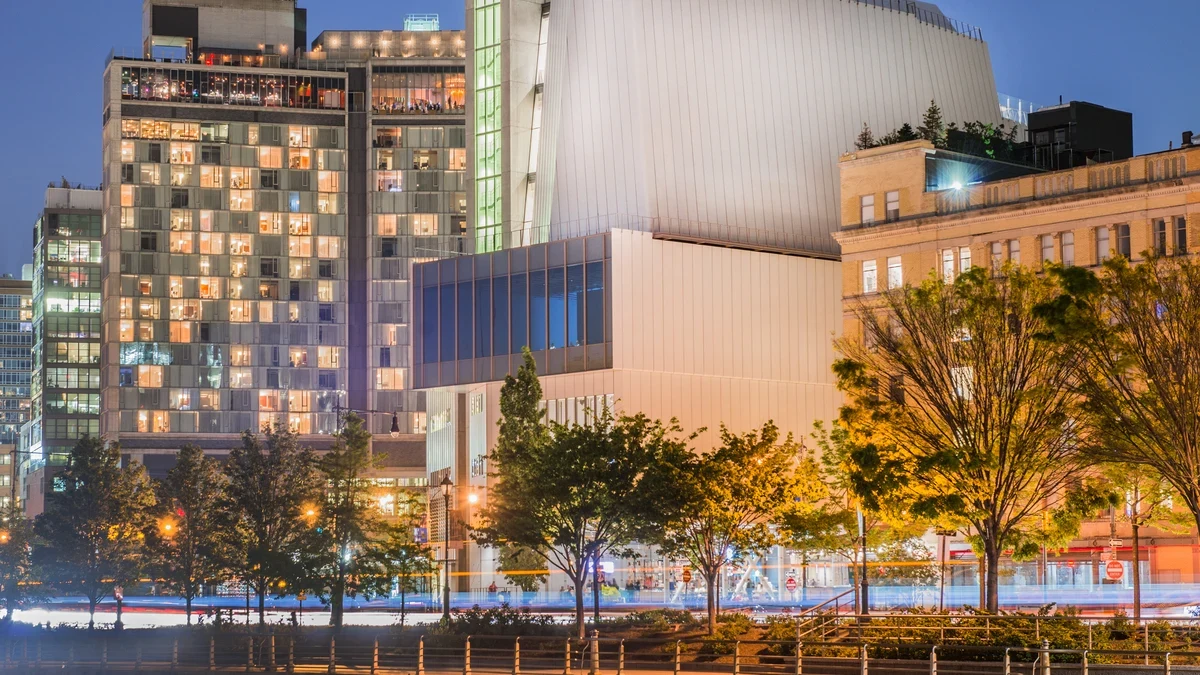
A first visit to the Whitney Museum of American Art is best run from the top down: take the elevator from the lobby at 99 Gansevoort Street to the highest gallery floor, work downward through the collection and special exhibitions, and use the cascading outdoor terraces — the building's signature — as the route between floors. The museum is open Wednesday through Monday from 10:30 a.m. to 6 p.m. and Friday until 10 p.m., closed Tuesdays, as of May 2026. Two hours covers the building at a first-visit pace; the Whitney is the most legible of New York's large museums, and its errors of navigation are self-correcting.
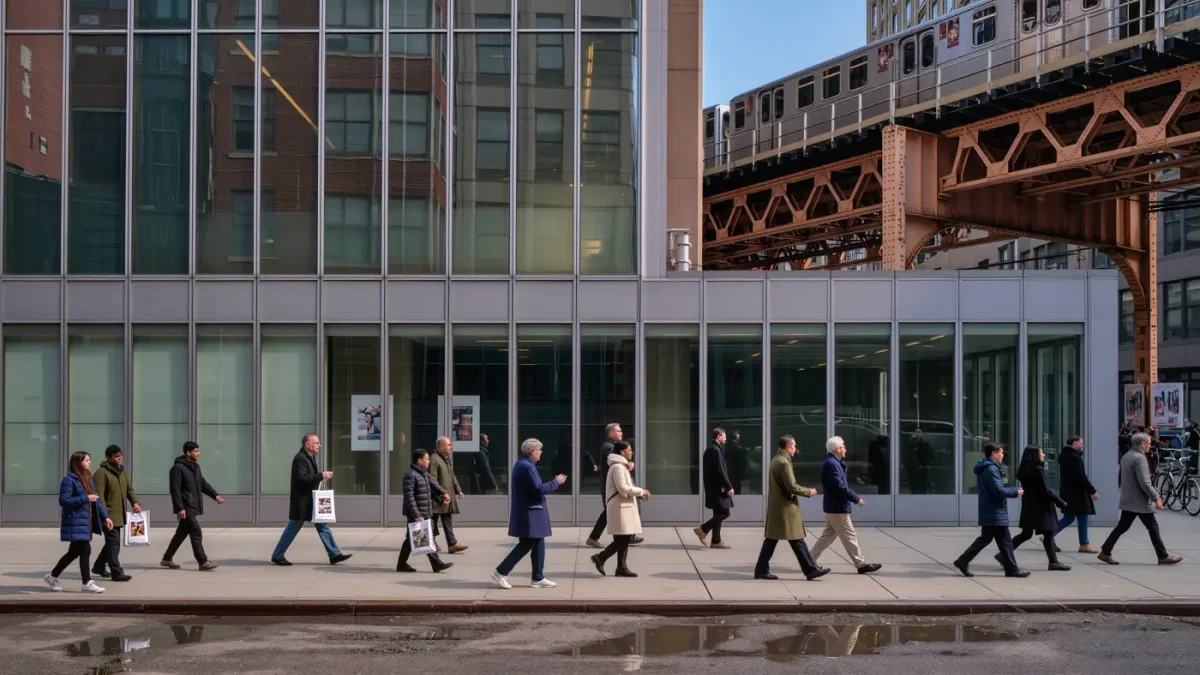
The building, designed by Renzo Piano and opened in 2015, moved the Whitney from its long-time Marcel Breuer quarters on Madison Avenue to the Meatpacking District, planting the museum at the southern foot of the High Line with its main façades facing the elevated park and the Hudson River beyond. The institution's program is American art of the twentieth and twenty-first centuries in all media, which means the permanent-collection floors double as a running survey of the country's art history, punctuated by the biennial and temporary exhibitions the museum is known for. Everything below is as of May 2026 and subject to change.
How are the floors arranged?
The galleries climb from the third floor upward, with education spaces and the film and video program on the lower levels, and the eighth floor holding the top run of galleries, the Studio Bar and the largest terrace. The standard sequence for a first visit inverts the numbers: elevator to eight, then descend, because the building's ramps, stairs and outdoor sculpture terraces were designed to be read downward, with the Hudson reappearing at each level. Frenchette Café and Bakery sits on the first floor and opens earlier than the galleries, which makes it a staging point for the 10:30 a.m. opening.
Three practical notes govern the stack. The outdoor terraces are galleries, not balconies — sculpture is installed on them and they count as part of the route in warm months; the stair between floors is itself a viewpoint, with landings that frame the High Line's planting through tall glass; and the elevator lobby on each floor is the museum's real circulation spine, so a tired visitor can skip a floor without penalty by continuing down.
Visitors with time to spare should not skip the lower levels entirely. The film and video galleries and the education spaces on the second floor hold quieter programming that changes independently of the headline exhibitions, and the lobby itself often carries a commissioned installation viewable without commitment. The Whitney's collection density sits on the middle floors, where the permanent display of American art is rehung often enough that a second visit rarely repeats a first.
Where are the best views in the building?
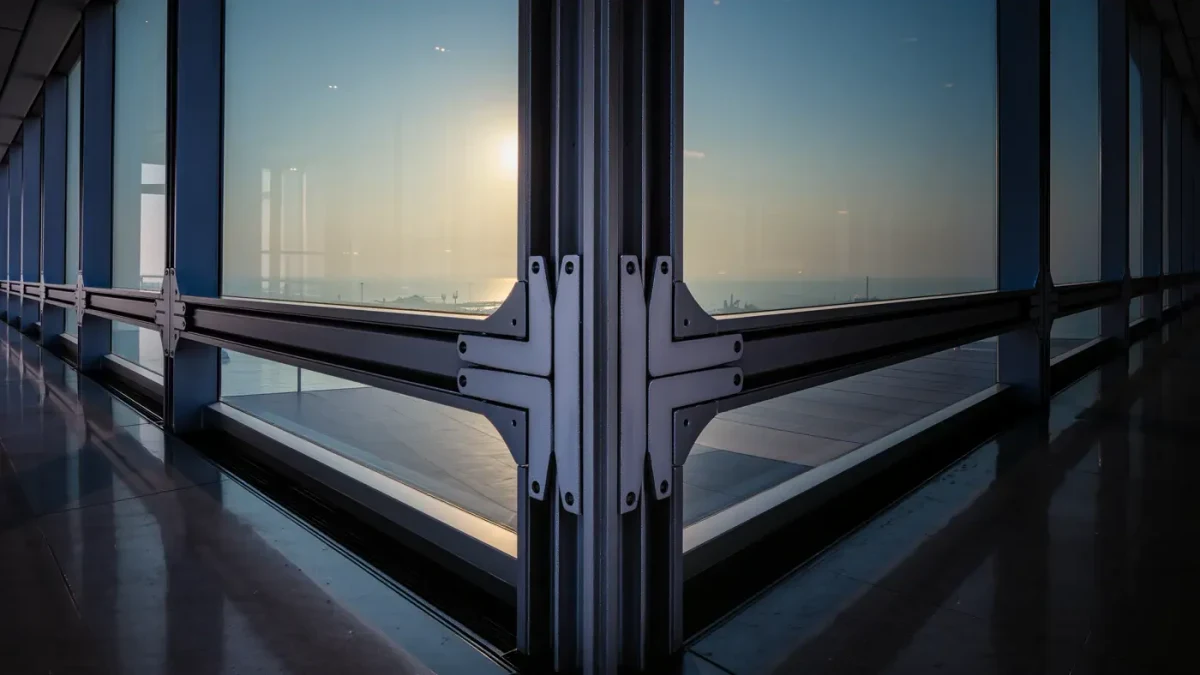
The west-facing terraces on the upper floors look directly over the Hudson River to New Jersey, and the topmost terrace outside the Studio Bar is the widest of them — the museum's own visit page lists the bar on floor eight, and the terrace it serves functions as the building's lookout. From that corner, the view runs down the river to the harbor and the Statue of Liberty on clear days; from the lower terraces the perspective swings east, over the High Line's planted beds and the rooftops of the Meatpacking District, with One World Trade Center rising behind Gansevoort Street to the south.
The framed window on the upper stair landings is the building's most photographed interior detail and earns it: a single tall pane that crops the elevated park and the street grid into a composed picture. Visitors would do well to treat the architecture as a third of the visit — Piano's building is unusually generous with sightlines for a museum of this size, and the effort spent climbing its stairs is repaid in views no ticketed observation deck in the neighborhood matches.
How does a Whitney visit combine with the High Line?
The combination is nearly frictionless because the museum sits at the park's southern terminus. The Gansevoort Street entrance to the High Line is a block and a half from the museum's door; the standard plan is the Whitney first, from the 10:30 a.m. opening to about 1 p.m., lunch in the Meatpacking District, then the High Line north — the walk takes thirty to forty minutes without stops and deposits the walker at Hudson Yards, from which the 7 train runs east. Reversing the order, park first and museum after 3 p.m., trades the quiet galleries of the morning for the late-afternoon river light on the terraces, a defensible exchange in summer when Friday hours run to 10 p.m.
Two cautions keep the pairing pleasant. The High Line's narrowest sections jam on weekend afternoons between Gansevoort and West 14th Street, so weekday mornings move at walking speed while Saturdays sometimes do not; and the Whitney's Friday-evening hours draw a post-work crowd that fills the top-floor terrace bar first, so visitors wanting the lookout to themselves should arrive before 5 p.m. or right at the evening opening.
When should first-time visitors go?
Wednesday, Thursday or Monday at the 10:30 a.m. opening, when the galleries run quietest through the lunch hour; Friday mornings are similar, and Friday evenings are lively rather than empty. Saturdays are the museum's busiest day, particularly during the run of a biennial or a major special exhibition, when timed-entry slots for the late morning sell ahead. The building's compactness softens even bad timing — a crowded floor empties within an hour as tour groups cycle through, and the terraces absorb overflow in every season but deep winter.
| Day | Hours (as of May 2026) | Character |
|---|---|---|
| Wednesday, Thursday, Monday | 10:30 a.m. to 6 p.m. | Quietest at opening |
| Friday | 10:30 a.m. to 10 p.m. | Evening crowds after 5 p.m. |
| Saturday, Sunday | 10:30 a.m. to 6 p.m. | Heaviest weekend traffic |
| Tuesday | Closed | Plan galleries in Chelsea instead |
How long does a first visit take?
About two hours at a steady pace, two and a half with the terraces taken seriously, and longer during the biennial years when the exhibition fills additional floors. The building supports a short visit better than its peers: a determined hour run from the top floor down through the collection's highlights reaches the lobby with the museum's argument intact. Families should note that the education floors and the lobby's ground-level installations give children an early win, and that the terrace railings make the outdoor route strollable in good weather.
Visitors extending the day have two natural add-ons beyond the High Line: the Chelsea gallery district begins at West 19th Street, a fifteen-minute walk up Tenth Avenue, and the Meatpacking District's restaurant row on Washington Street sits two blocks south. The A, C, E and L trains at 14th Street and Eighth Avenue serve the neighborhood, with the L crossing to Brooklyn for a Williamsburg continuation.
What are the practical details?
Venue: Whitney Museum of American Art, 99 Gansevoort Street, Manhattan, at the southern end of the High Line. Subway: L, A, C, E to 14th Street and Eighth Avenue, an eight-minute walk; 1 to 14th Street; 7 from Hudson Yards after a High Line walk north. Hours: Wednesday to Monday 10:30 a.m. to 6 p.m.; Friday to 10 p.m.; closed Tuesday (as of May 2026). Café: Frenchette Café and Bakery on floor 1; Studio Bar on floor 8. Hours, exhibitions and admission policies subject to change; the museum's visit page is the current authority.