The New Museum reopened at 235 Bowery on March 21, 2026, adding a 60,000-square-foot building that the museum says doubles its gallery space, following an $82 million capital project announced on January 13, 2026. Admission was free over the opening weekend of March 21 and 22. Ten days on, the museum that pioneered contemporary art on the Bowery is twice the institution it was.
The expansion, designed by OMA partners Shohei Shigematsu and Rem Koolhaas with Cooper Robertson as executive architect, rises beside the museum's 2007 home by SANAA. According to the museum, the pairing makes the campus the combined work of two living Pritzker Architecture Prize winners, and the new building is named for the late collector Toby Devan Lewis, the campaign's lead donor.
What opened on March 21?
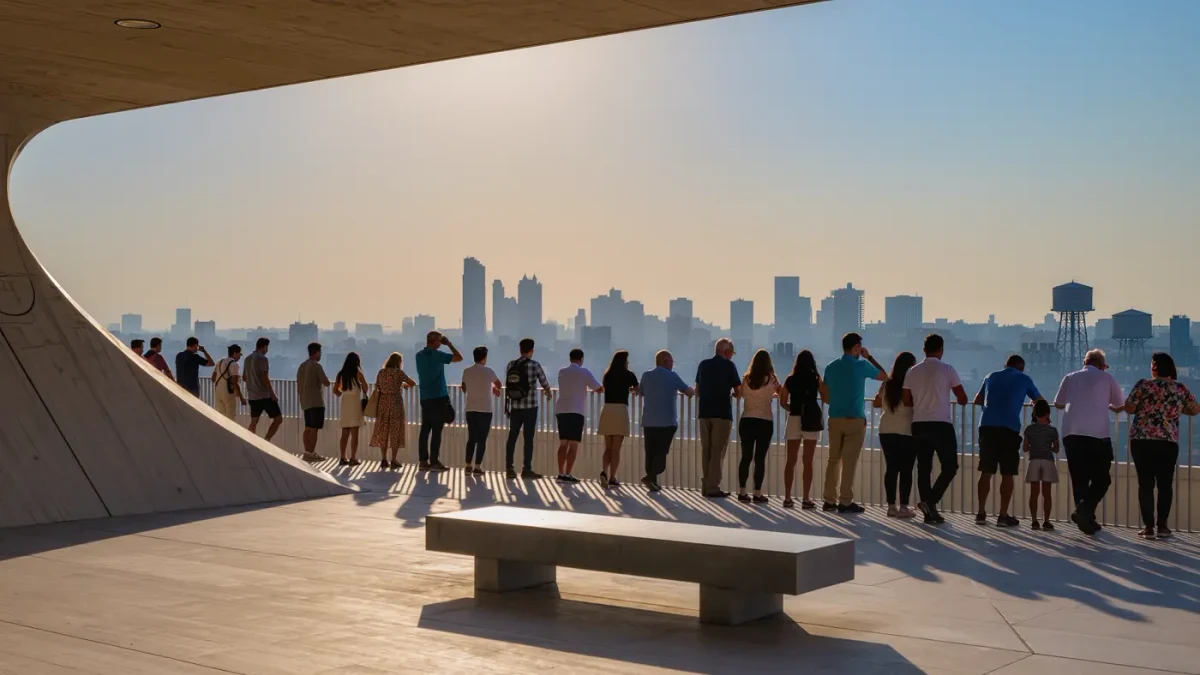
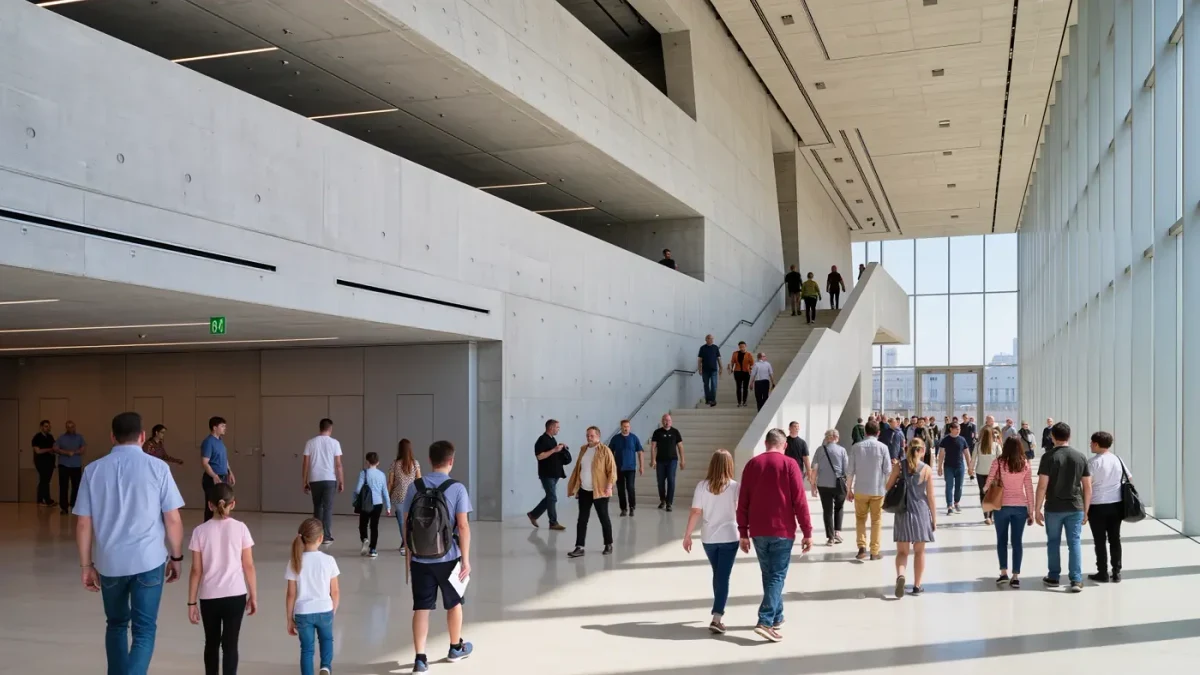
A seven-story tower that changes how the whole campus works. The combined building now runs to roughly 120,000 square feet. Three elevators serve the galleries; an Atrium Stair threads the floors as a second, more social route; an entrance plaza opens the Bowery frontage; and the enlarged seventh-floor Sky Room caps the stack. A 74-seat Forum, built for talks and screenings, gives the museum's public programs a room of their own for the first time.
The museum had been closed for roughly two years of construction. The delay was modest by museum-building standards — the project was announced in 2025 with a fall opening, and the final date landed in March — but the effect is abrupt: an institution long known for tight, white-walled floors suddenly has room to spread.
What does the inaugural exhibition fill the building with?
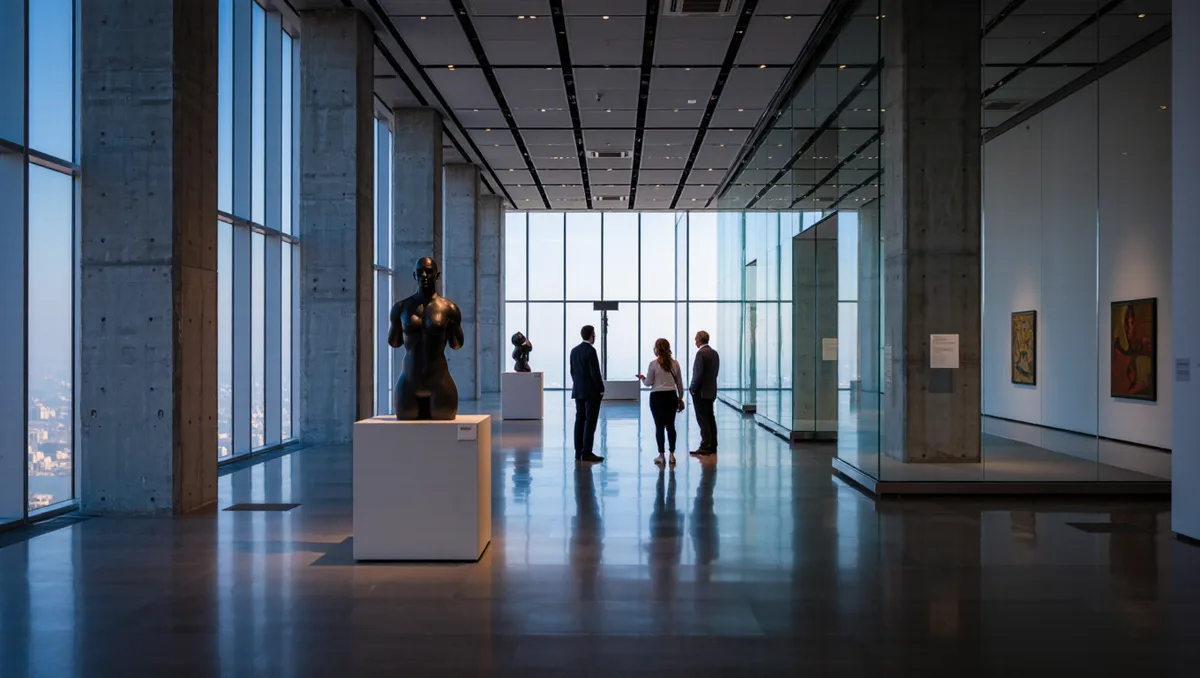
New Humans: Memories of the Future, a survey of how technologies shape art and memory, spans the entire expanded building — three main gallery floors plus the staircase, Sky Room and lower-level lobby. Per the museum, it gathers more than 200 artists, writers, scientists, musicians and philosophers, with new commissions threaded through the architecture: a facade work by Tschabalala Self, an installation by Klára Hosnedlová wrapping the Atrium Stair, and a public plaza sculpture by Sarah Lucas.
The scale is the point. A show of this ambition could not have fit in the 2007 building, and the museum has scheduled it to demonstrate exactly that — visitors who knew the old seven-story stack of galleries will measure the difference floor by floor.
Why did the opening take the long way?
The expansion was announced on February 27, 2025 with a fall 2025 opening target, which the museum subsequently moved to March 21, 2026, per its announcements. For OMA, the building is a milestone the press materials make plain: the firm’s first public building in New York City, designed by partners Shohei Shigematsu and Rem Koolhaas. Museum construction in Manhattan rarely lands on the first advertised date, and a five-month slip on a project of this scale counts as a modest one.
How should a first visit be planned?
A reasonable first pass runs top to bottom. The elevators serve the main gallery floors of New Humans; the Atrium Stair returns visitors through Hosnedlová's installation on the way down, past the Forum and the bookstore toward the Freeman Alley exit. Budget at least half a day for the full building — the exhibition's three main floors are dense, and the staircase, Sky Room and lobby works are part of the checklist rather than decoration around it.
Visitors who prefer smaller doses should note the Thursday evening hours, when admission is pay-what-you-wish from 7 to 9 p.m. The quieter the building, the better the staircase reads; it is the one element of the expansion that is experienced rather than looked at.
What does the building add beyond galleries?
The reopening completes a decade-long arc on the Bowery. The museum announced its expansion years before ground was broken, watched the city’s gallery districts multiply around it, and now returns with a building sized to the moment. What the new rooms change above all is the institution’s capacity to commit: longer exhibitions, larger commissions, programs with dedicated space instead of borrowed corners.
Programming space, which the old building rationed. The 74-seat Forum now hosts the talks and screenings that were previously squeezed into flexible floors; the enlarged Sky Room holds public events above the city; and a dedicated studio floor anchors the museum's artist residency. NEW INC, the museum's incubator for art, design and technology practitioners, has moved into the building, shortening the distance between the museum's exhibitions and the practices it studies.
Education gained the most per square foot. Alongside the Free Family Days on the first Sunday of each month and the free guided tours for New York City public school groups, the reopening supports a new teen fellowship for high school students and a monthly free night for teens, per the museum's announcement. For a building whose brief is the new, its most durable additions may be the rooms that train the museum's next audiences.
What is different for a visitor?
- Getting in. The main entrance remains on the Bowery; the new full-service restaurant, run by the Oberon Group with executive chef Julia Sherman, is entered from Freeman Alley behind the building.
- The bookstore. Doubled in size and accessible without a ticket, so walk-in browsing no longer requires museum entry.
- Vertical circulation. Between the three elevators and the Atrium Stair, the building can be walked top-down for the first time rather than sampled floor by floor.
- Art beyond the galleries. A restaurant commission by Ian Cheng, furniture by Minjae Kim, the Self facade and the Lucas plaza sculpture extend the exhibition into the architecture.
Two long-running programs also gained a home: the museum's incubator NEW INC has relocated into the building, and a studio space now hosts an artist residency, returning production to a museum that has always argued for it.
When should you go, and what does it cost?
The museum is open Tuesday through Sunday from 11 a.m. to 6 p.m., with Thursday evenings until 9 p.m. and pay-what-you-wish admission from 7 to 9 p.m., per the museum's announcement. General admission is $25, seniors $22, students $19; visitors 18 and under are free, as are SNAP and EBT cardholders.
| When | Hours | Admission notes |
|---|---|---|
| Tuesday–Wednesday, Friday–Sunday | 11 a.m.–6 p.m. | Standard admission applies |
| Thursday | 11 a.m.–9 p.m. | Pay-what-you-wish, 7–9 p.m. |
| Monday | Closed | — |
Families have dedicated entry points into the program: a Kids Activity Guide by the artist Azikiwe Mohammed accompanies the inaugural exhibition, Free Family Days run the first Sunday of each month, and the museum continues to offer free guided tours for New York City public school groups.
Director Lisa Phillips, in the reopening announcement, framed the project as the museum "honoring our founding promise to be a place of experimentation, discussion and debate." The building backs the phrasing with square footage — twice the galleries, a forum, a residency and a room above the city.
What are the practical details?
Venue: The New Museum, 235 Bowery, New York (restaurant entrance on Freeman Alley). Current exhibition: New Humans: Memories of the Future, opening March 21, 2026 and spanning the expanded building. Hours: Tuesday–Sunday, 11 a.m.–6 p.m.; Thursdays pay-what-you-wish, 7–9 p.m. Admission: $25 adults, $22 seniors, $19 students, free for visitors 18 and under and SNAP/EBT cardholders. All hours, prices and program dates are subject to change; check the museum's current listings before visiting.