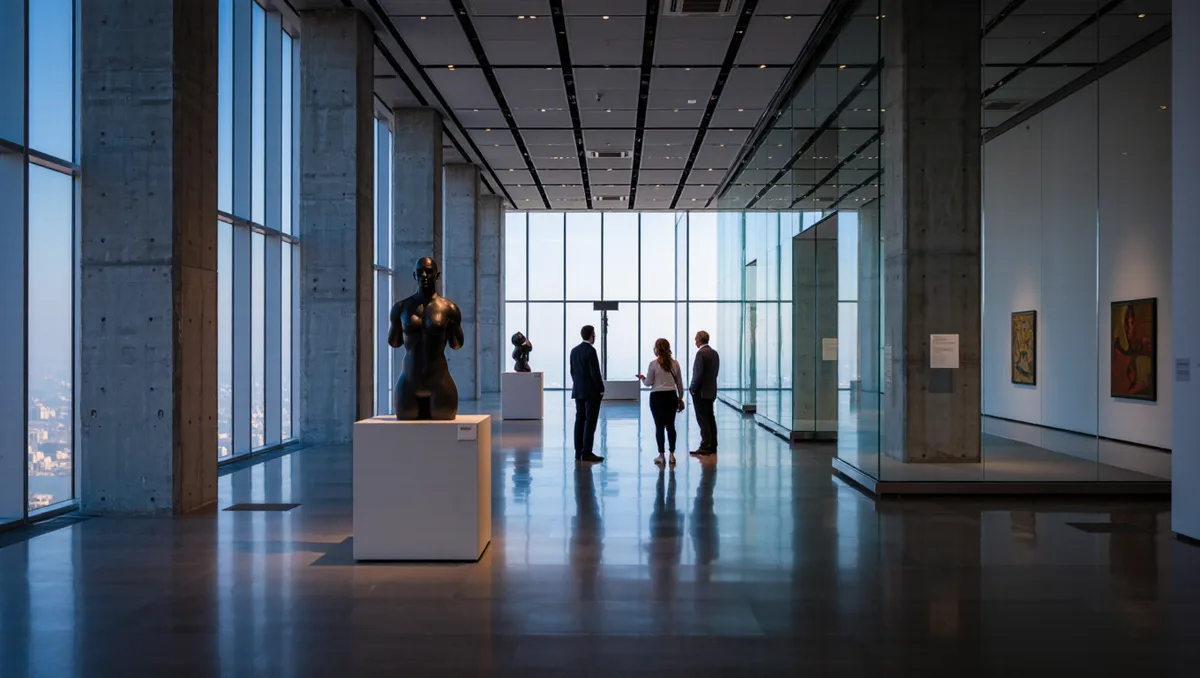
A group show can feel like a lot at once. Ten, twenty, sometimes fifty artists share one room. Every piece fights for your eye. Many visitors walk out unsure what they just saw, and some stop going to galleries altogether.
It does not have to feel that way. A group show has a shape. Once you know how these shows are built, you can move through the room with a plan. Here is a simple way to read one.
Know What a Group Show Is
Most art exhibitions come in a few basic forms. A retrospective looks back over the work of a single artist. A solo show does the same for one artist's new work. A group show, by contrast, places several artists side by side. Group shows sit among the most common exhibition types, right next to retrospectives and solo shows. That mix is the point: the show invites you to compare one voice with another. Big versions of the idea are everywhere. The Biennale is a large exhibition held every two years, often meant to gather the best of international art. A travelling exhibition moves between several venues, sometimes across the world.
Start With the Theme
Most group shows hang on one idea. Temporary museum exhibitions usually display items from a museum's own collection on a particular period, theme or topic, often topped up with loans from other collections. So the title and the wall text matter. Read them first, before you look at a single work. Then ask a plain question: what does every piece here share? The answer might be a time, a place, a mood, or a material. A loose theme is not a weak one. It just gives you more room to think, and it gives the artists room too. Readers following this should also see How to read museum wall labels.
Read the Room Before the Art
The venue tells you what kind of show you have walked into. There is one big split to spot. Some shows include works that are for sale, and some include none at all. Museum shows normally include no items for sale. Commercial gallery shows are often made up of items that are for sale. Neither kind is better than the other. But knowing the difference changes how you look. It also explains the feel of the room, from quiet white walls to a busier, sales-minded space.
Find Out How the Artists Got In
Not every group show is picked the same way, and the picking method shapes what you will see. New art shows can be juried, invitational, or open. A juried exhibition has a judge, or a panel of judges, who selects the submitted works, and usually the prize winners too. An invitational exhibition asks certain artists to supply artworks. An open, non-juried exhibition lets anybody enter and shows them all. The entry route tells you a lot. It explains why some shows feel tight and others feel mixed. It also helps you set fair expectations before you go. We covered a connected angle in Why some exhibitions run ten weeks and others run a year.
A Simple Walk-Through Plan
Give the theme five minutes. Skim the wall text and the labels. Then do one fast lap of the room and pick two or three works that pull you in. Go back to those. Look for the link between your picks and the stated theme. If staff or other visitors are nearby, ask what ties the room together. Most people love that question. You will leave with an opinion instead of a blur, and you will remember the show far longer.
Conclusion: Trust Your Own Read
A group show is a conversation with many voices. The theme sets the topic, but you bring your own reading. Learn the basic show types, spot what kind of venue you are in, and choose your favorites with intent. That is all it takes to make sense of a crowded room. Next time a group show feels like noise, slow down and find the thread. The room will start to talk back.