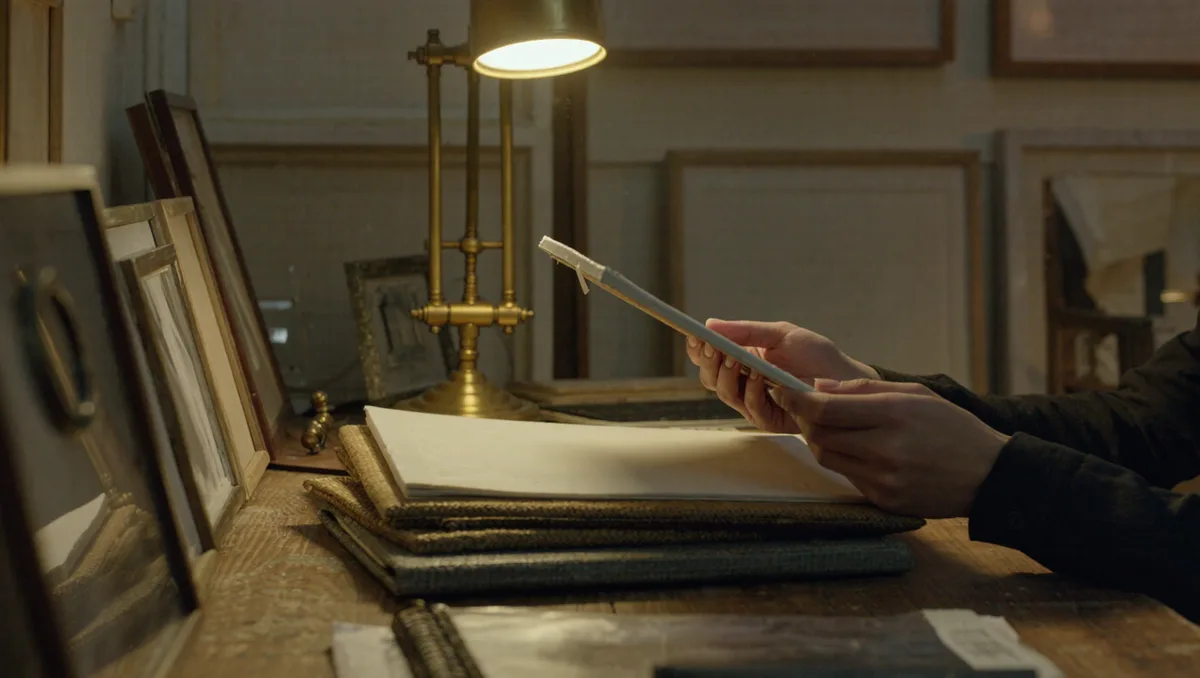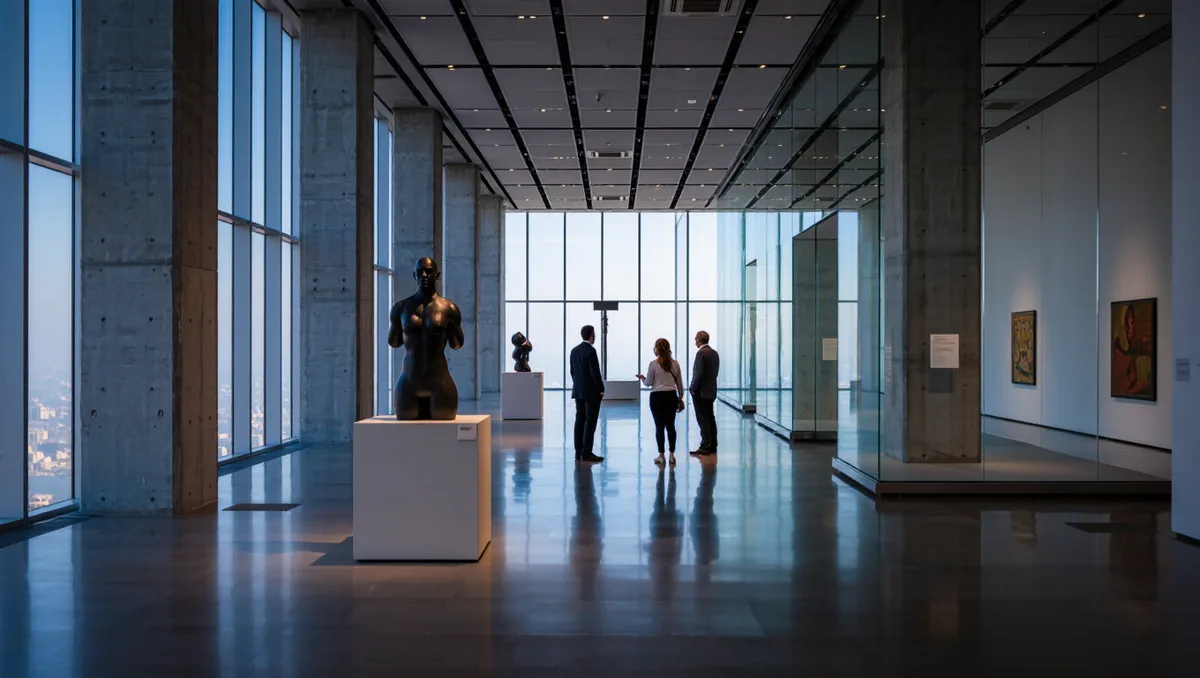
An exhibition is a group of works brought together on purpose, for a limited time, so the public can see them. That is the short answer. The word covers a museum blockbuster, a one-evening gallery show and a themed survey, but not a museum's permanent collection, which stays on view year after year. The difference is not snobbery. It changes who chose the works, why they hang together, and how long you have to see them.
The word itself carries a hint of proof. According to The Free Dictionary, "actually" means in fact, in reality, really, without exaggeration. So the question in the headline is a fair one: when a museum or gallery puts up a sign, what is in fact happening behind it? The answer depends on a handful of terms that curators and registrars use precisely and the public often uses loosely.
What makes an exhibition different from a collection?
A permanent collection is what a museum owns or holds in trust. It is the vault, the storage racks, the works that belong to the institution. A collection display, sometimes called a permanent installation, shows part of that holding on an ongoing basis. It has no closing date. When the Met rehung its European paintings, the works did not stop belonging to the museum; only the arrangement changed. A display of a collection is curated too, but its job is stewardship: to keep the holdings visible and coherent over years.
An exhibition, by contrast, is an event. It has a title, a run, a closing date and usually an admissions or scheduling logic of its own. Someone, or a team, chose these works for this room for this season. When the run ends, the works go back: to lenders, to storage, to the artists. That return is the clearest test. If the works leave when the show closes, you were looking at an exhibition.
Practically, this matters to visitors. Collection displays are reliable; they will be there next month. Exhibitions are perishable. Our analysis of how the terms get used in listings is simple: if a closing date is printed, it is an exhibition. If not, it is probably a collection display, and you can plan around it more loosely.
What is a group show?
A group show gathers works by several artists under one idea. The idea can be strong or loose. A themed exhibition might hang a dozen artists around a subject, a place or a material. A gallery's summer group show might simply gather what the gallery wants to move, which is a business fact worth remembering: commercial galleries are small operations with rent, and a group show is often how they introduce several artists at once.
The reading skill is different here. In a solo show, you judge an artist against their own development. In a group show, you judge a curator's argument. Why do these works sit together? What does the wall text claim, and does the hang support it? How to Read a Group Show: Making Sense of Themed Exhibitions walks through that process in detail. The short version: read the premise first, then check whether the individual works earn it.
What do survey, retrospective and mid-career mean?
These three words describe one-artist exhibitions at different scales, and museums use them with some care. A retrospective is the large version: an artist's career looked at whole, usually from early work to the end, often decades in the making and years in the planning. A survey is broader but lighter; it maps a career or a body of work without claiming to be complete. A mid-career survey sits between the two, taking stock of an artist at roughly the halfway point rather than at the summit or the end.
The labels tell you what to expect from the rooms. A retrospective promises depth: early, obscure, unfinished things you would never see otherwise. A survey promises range. Neither promises a greatest-hits wall, and a mid-career survey by definition cannot include what the artist has not yet made. What museums mean by survey, retrospective and mid-career survey covers the distinctions further.
What about biennials, fairs and travelling shows?
Three more terms appear constantly in New York listings, and each works differently. A biennial, such as the Whitney Biennial, is a recurring survey of current work across many artists, organized by an institution and remade fresh each cycle. It is an exhibition with a fixed rhythm and an argument about the present. An art fair, by contrast, is a marketplace: booths run by dealers, works for sale, a run of days. Fairs look like exhibitions and borrow the vocabulary, but the organizing principle is commerce. No fair booth has a closing date in the museum sense; it has a teardown schedule.
A travelling exhibition is a show built by one museum and lent to others. The same checklist of works appears in city after city, with the host museum adjusting the hang to its own rooms. This is why a tour can take years, and why the catalogue you buy in New York may describe a hang you will never see. How exhibitions travel between museums explains the logistics, from crates to insurance.
How long does an exhibition run, and why does it vary?
Run lengths vary more than visitors expect, and the reasons are practical. Loan agreements set how long a borrowed work can stay out. Conservation limits how long works on paper, textiles and photographs can sit under light. Curatorial calendars cluster big shows into certain seasons; New York museums have long opened their largest exhibitions in the fall and run lighter programs through the summer, a pattern explored in Why New York museums open blockbusters in the fall and run light in the summer. Scheduling, staffing and shipping all push the dates.
So a ten-week run and a year-long run can both be legitimate exhibitions; the length reflects the works and the loans, not the ambition. What matters for planning is the closing date, which is always worth checking against the museum's own page before you travel, since dates can change.
What this means for how you plan a visit
Once you can tell the categories apart, listings become easier to read. A collection display rewards a slow, repeatable visit; there is no rush. A group show asks you to evaluate an argument. A retrospective asks for stamina and rewards a second lap, once the impact has registered and you can look at craft. A fair asks you to keep your wallet judgment separate from your eye.
Visitors would do well to match the visit to the format. If the show is perishable, book early and check the closing date. If it is a collection rehang, any Tuesday will do. For a general checklist that applies across formats, The smart visitor's checklist for exhibitions in New York is a useful companion, and Why some exhibitions run ten weeks and others run a year goes deeper on timing.
The evidence here is definitional, drawn from standard museum practice rather than any single announcement. What remains unsettled is the edge: pop-up displays, window installations and performances borrow the word "exhibition" freely, and no registrar polices them. The durable test stands anyway. Works brought together on purpose, for a limited time, for the public to see. If the works go home when the lights go down, it counted.