Four years after dozens of artists were pushed out of Cleveland's ArtCraft Building, the local reporting reads like a rare good ending: the painters, illustrators, sculptors and photographers who left have mostly landed at the Twist Drill Building, twenty blocks east, and by their own account they are happier there. According to Cleveland Scene, the building's landlord, TurnDev, ended month-to-month leases in late 2022 "in order to facilitate restoration," and the ArtCraft is now set to open as the city's new police headquarters.
The story deserves a second opinion, because happy endings in artist-displacement stories are unusual enough that they should be examined rather than celebrated. What the four-year record actually shows is a mix of genuine gains, unresolved trade-offs, and one uncomfortable question: whether the outcome depended on luck rather than anything a city could repeat on purpose.
Start with the gains, which are real and specific. The Twist Drill, at East 49th and Lakeside in Cleveland's Midtown, offers what the old warehouse did not. It has four working freight elevators, where the ArtCraft's were faulty. Central air has replaced what the report describes as balmy summers and steam heat. Shared clutter has given way to private, white-walled studios with views of Lake Erie. Painter Wally Kaplan, who once told the outlet that nowhere compared on rent, now says she has more freedom in her fifth-floor studio, down to being able to play the music she wants. "Which is laughable, yes," she said. "But that really matters. It does."
What did the move actually cost?
The skeptics' case starts with rent, and the source material does not resolve it. Kaplan's earlier verdict — "Nowhere compares rent-wise," she said in 2022 — is never revisited with a number four years later. The article reports satisfaction but not what the new studios cost, who absorbed the increase, or whether any of the original tenants simply left the city rather than move east. Roughly twenty ArtCraft émigrés work out of the Twist Drill; how many others scattered is not stated. A success story measured only among those who remained is, by definition, a survivor's account.
There is also the matter of what the artists left behind collectively. The premise of a clustered studio building, the report notes, is that a group of artists working together is more exciting to a city than a lone one. The Twist Drill has solidified its place among what the report calls the Big Three artist buildings in the Cleveland area, alongside the Screw Factory in Lakewood and 78th Street Studios in Gordon Square. But a cluster that took decades to form was dissolved in a single landlord's letter, and reconstituting it took four years and a willing building owner. Nothing in the record suggests the city had a plan for that.
Can a studio building sell art from a maze of staircases?
The economic case for the new home is genuinely uncertain, and the artists themselves say so. Janet Luken, the nature painter who led the coalition to the Twist Drill's fifth floor in 2022, now runs a group called Artists at the Twist, which shares studio costs and organizes the building's annual holiday show. Her reasoning for selling directly is blunt: "galleries often take half of your sales." A 2025 survey of hundreds of makers in the UK, cited in the report, found that nearly two-thirds of their sales came from face-to-face purchases — which is precisely why open houses matter, and why the Twist Drill's limitations are a problem.
The fifth-floor studios are hard to reach, requiring what the report calls a maze-like trek up several staircases. Way-finding is sparse. Even tenants in a second-floor event space did not know how to navigate to the artists' studios. Michael Fleming, who took over the Twist Drill in 2020 and opened it to the ArtCraft tenants as a refuge, says he is working on it — but he is candid that the building is not ready for anything like 78th Street's Third Friday. "Right now, we're in the hidden gem stage of our life, and I prefer to relish that as long as we can," he said. He would rather grow the building as a public-friendly hub naturally than pretend Midtown's industrial streets are walkable. They are not, by his own assessment.
That is an honest trade-off, and it cuts against the easy reading of the story. Privacy, light and working elevators improve the making of art. They do not, on their own, improve the selling of it, and for working painters the two are linked. Luken's own framing — that studios are a luxury item, an extra cost, and that "we're really limited" in facilities to present artwork in Cuyahoga County — is the quiet counterweight to the headline happiness.
Was this a rescue or a coincidence?
The least examined part of the story is the role of the landlord. Fleming says the Twist Drill is financially sound and its studios, from small to large, are about fully occupied. Last year he bought the building across Lakeside and rehabbed it into the MultiCraft, which primarily houses an arts supply store, with more studio space coming. He was, in other words, both willing and able to take in twenty artists. That is to his credit, but it is not a policy. A city whose artists survive displacement only when a sympathetic owner happens to have four freight elevators and spare top floors has not solved anything; it has been fortunate.
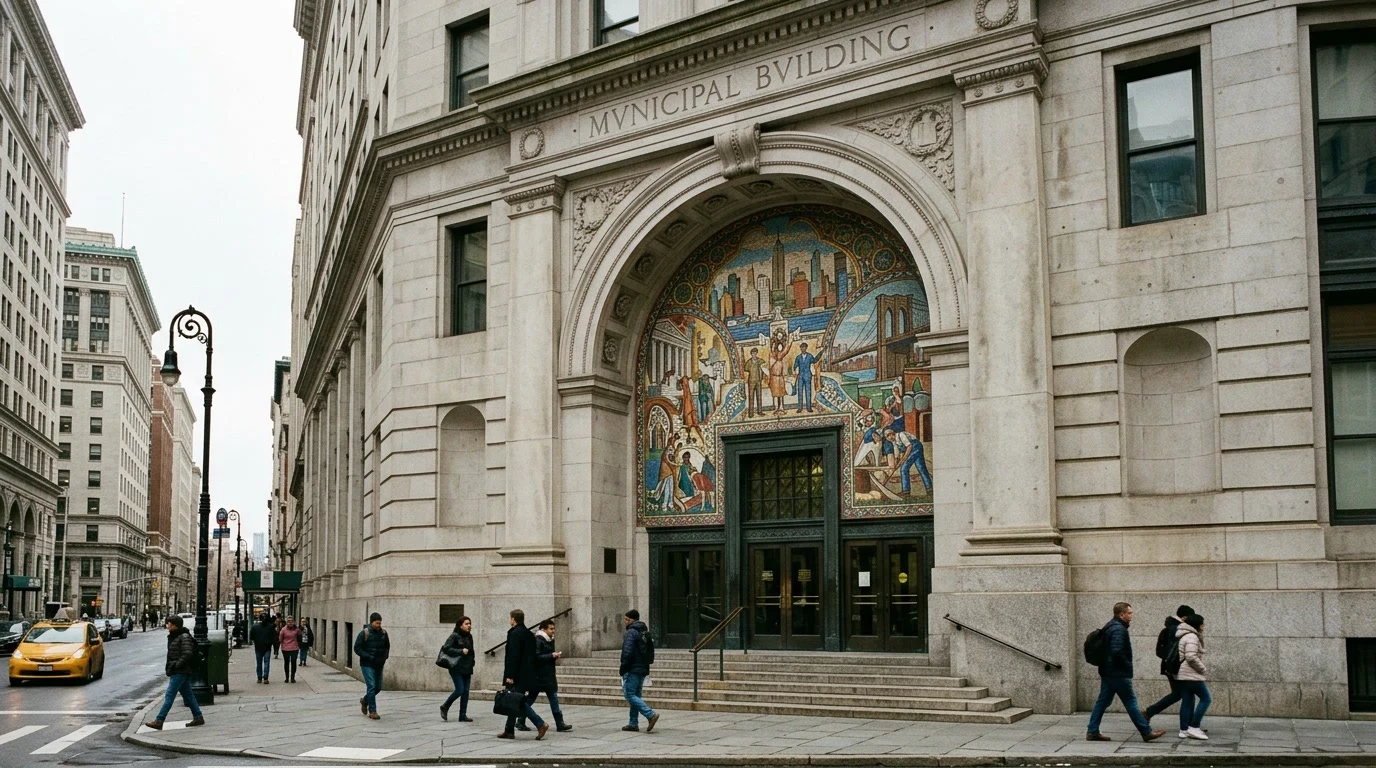
Even the city's role is ambiguous. A spokesperson said construction on the police headquarters is about wrapped up, with an opening date pending, and that the city might hire former ArtCraft tenants to decorate the building's new phase with public art. That would be a tidy full circle, and cities do think seriously about how public commissions are awarded — as the process in New York shows, where which artist gets a public art commission is a structured question rather than a gesture. Whether Cleveland's idea advances beyond a spokesperson's possibility remains to be seen. The mechanics of how a public artwork gets commissioned matter, because a vague offer of future decoration is not the same as a commission. Readers following this should also see How New York decides which artist gets a public art commission.
The measured verdict, then, is this: the artists' contentment appears genuine, and the individual gains — space, air, quiet, privacy — are documented in their own words. But the report offers no rent figures, no accounting for tenants who did not land at the Twist Drill, and no evidence that the city learned anything transferable about keeping studio stock intact. For readers in New York, where studio displacement is a familiar pattern, the useful lesson is not that these artists are happy. It is that they are happy despite the system, not because of it — and that the difference between those two things is where the next story will be decided. This connects to our earlier piece, How a public artwork gets commissioned in New York.