The trick to a good free weekend in Boston is not finding one great event. It is building a routine that works whether the calendar is crowded or empty. The city's galleries, libraries, university museums and public art reset themselves week after week, so the same loop keeps paying out.
This guide is that loop. It is a template of events in Boston this weekend that you can run any Saturday and Sunday, in any season, with a short check beforehand to see what has rotated in. Nothing here depends on a festival, a holiday or a ticket lottery.
Where does the weekend actually start?
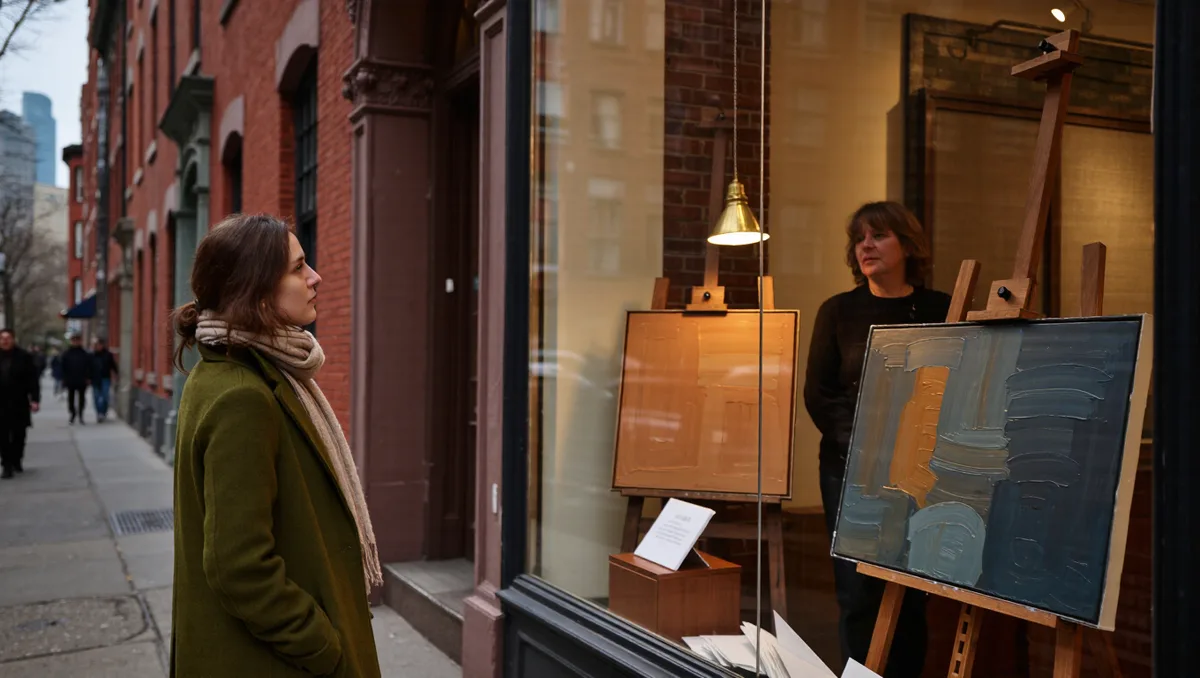
Start on a street, not a screen. Boston's free cultural life clusters in a handful of walkable districts, and the walk itself is the first exhibit. The Harborwalk and the Greenway put public art and harbor views in front of you before you have spent anything. In the South End and SoWa, gallery blocks keep regular daytime hours, and browsing costs nothing — dealers expect window-shoppers, and a slow Saturday crowd is part of how a gallery street stays a gallery street.
The practical move is to pick one district per day. A gallery strip plus a park plus a library beats a scattershot list of addresses across the city. You see more, and you spend the savings on lunch.
What can galleries and open studios give you for free?
Commercial galleries are the most reliable free venue in any American city, and Boston is no exception. They are open to anyone during posted hours, no purchase implied, and the shows change every few weeks. That turnover is the whole point: a district you visited in October will show you different work in February.
Open studios run on a similar logic with better odds of meeting the artist. Buildings shared by working artists hold periodic open hours where studios welcome the public. Some happen monthly, some seasonally, so check the building's own page before you go. For readers who want the etiquette down before walking in, the mechanics are the same everywhere — our guide to how gallery openings work in New York translates directly, since the norms are city-independent.
One caution from long observation of the genre: an opening reception is a social event, not a viewing event. If you want quiet time with the work, go the second week of the run instead. We have covered what an opening reception is actually for, and when to skip it in detail.
Why are libraries the most underrated free venue?
The central branch of the Boston Public Library is an architectural destination in its own right, and its programming calendar — talks, exhibitions, film screenings, children's programming — refreshes constantly and costs nothing. Branch libraries across the neighborhoods run their own schedules, which is where a lot of the genuinely local stuff lives: neighborhood-history displays, community meetings, author visits.
The library also solves the weekend's worst problem, which is weather. When a nor'easter eats your Saturday, the library absorbs it. So does a couch: if the weekend truly collapses, there is always the fallback of free browser games — USA TODAY's free online games portal is one of several no-cost options that require nothing but a screen. It is not culture, but it is free, and the weekend survives.
What do university museums and campuses add?
Boston's density of universities means a rotating supply of free or low-cost art and lecture programming that most visitors never think to check. Campus galleries show student and faculty work, visiting-artist exhibitions and departmental collections. Many admit the public free or for a suggested donation, though policies vary by institution and change — verify on the museum's own page before you go.
Lectures and panels are the other campus dividend. Departments open talks to the public, and Q&A nights with working artists cost nothing but an evening. The habits that get you a seat are covered in our guide to how to get into artist talks and panels in New York; arrive early and sit before the speaker starts, and the same rules hold in any college town.
How do you keep the routine from going stale?
The template only stays fresh if one slot changes every week. Build it that way:
- Friday: check the gallery district's current shows and the library calendar. Ten minutes.
- Saturday: one district, walked slowly — galleries, public art, a park.
- Sunday: one library or campus event, plus whatever the weather allows outdoors.
- Once a month: an open-studio day or a new neighborhood, so the loop expands.
That monthly slot is where the bigger calendar events slot in when they happen. Boston's seasonal programming — a citywide open-studios weekend, a harbor festival, a museum's free-admission day — lands on top of the routine rather than replacing it. If an event week gets crowded enough to need strategy, our explainer on how New York's art fair weeks now work shows the general pattern of planning around a dense cultural calendar, which scales down to any city.
What this means in practice: the free weekend is not an event you find, it is a habit you keep. The galleries rotate, the libraries reprogram, the campuses bring in new speakers, and the harbor does not charge admission. Run the loop long enough and the stale-weekend problem solves itself.
The honest limits of a free weekend
Free programming has trade-offs worth naming. Hours are narrower — many galleries close by early evening, and library events end when the building does. Big-ticket museum shows will still cost money, and no template fixes that. What the routine buys instead is volume and variety: dozens of small, current, changing things rather than one marquee attraction. For readers building out a broader calendar habit, our events section tracks the kind of programming that anchors a week, and the guides collection holds the longer explainers behind most of the links above.