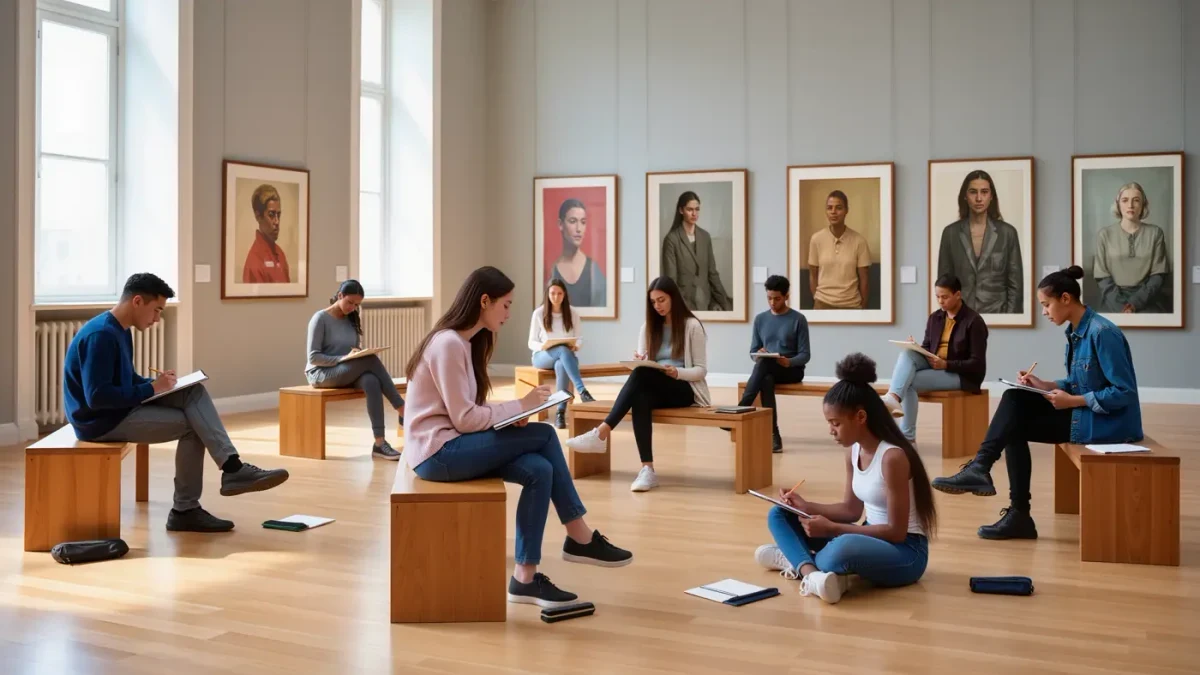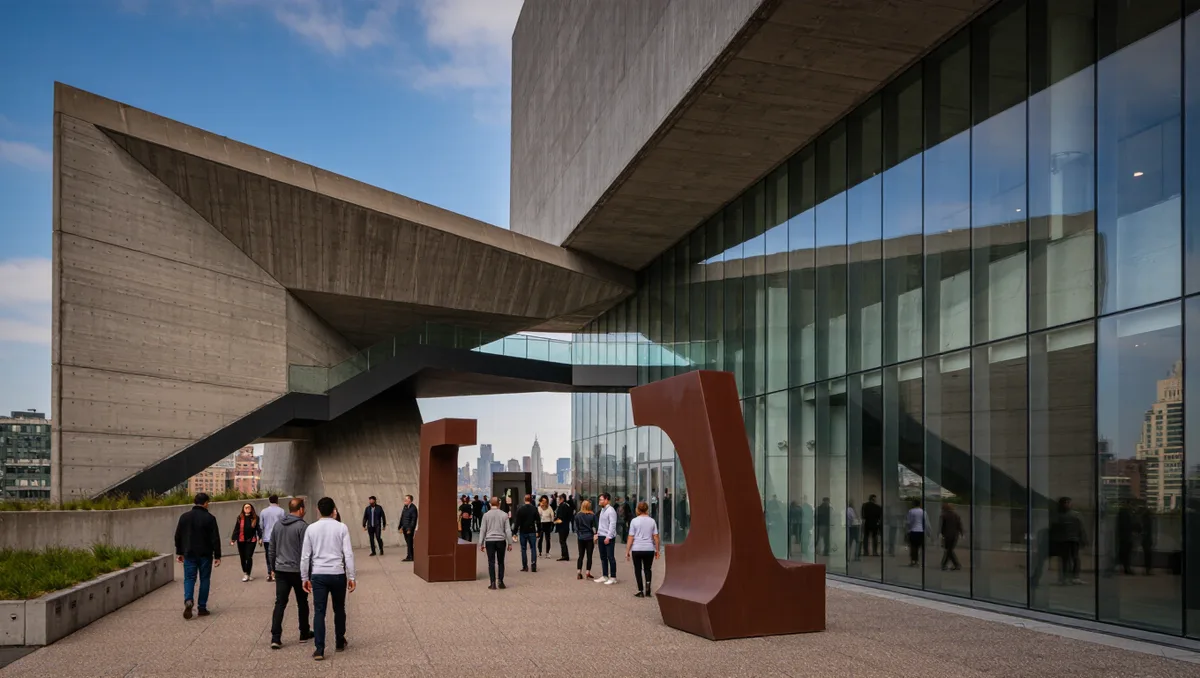
Alice Neel painted New York for nearly fifty years, and the city's museums hold her accordingly. The Metropolitan Museum of Art lists nine Neel works, including five oil portraits—among them Elenka (1936) and Henry Geldzahler (1967)—while the Whitney Museum of American Art owns her best-known late self-image, Self-Portrait (1980). The Met's 2021 retrospective gathered roughly one hundred of her paintings, drawings, and watercolors.
Neel (1900–1984) spent her career painting friends, family, lovers, artists, and political activists, convinced, as the Whitney's collection text puts it, that "people are the greatest and profoundest key to an era." She worked in upper Manhattan for most of her life, first in Spanish Harlem and later on the Upper West Side, and nearly all of the institutions in this guide sit within a few miles of the apartments where her sitters posed.
Which Alice Neel paintings are at the Metropolitan Museum of Art?
The Met's nine Neel holdings include five oils: Elenka (1936), Dick Bagley (1946), Lida Moser (1963), and, from a single strong year, Arthur Bullowa (1967) and Henry Geldzahler (1967). Geldzahler—then the Metropolitan's urbane curator of twentieth-century art and later the city's Commissioner of Cultural Affairs—sits in pink trousers and glasses, cigarette in hand, in what became one of the most reproduced portraits of New York's art world.
Elenka, a 1936 portrait of a solemn child, dates from Neel's years in Spanish Harlem, when she was painting neighborhood families, party organizers, and mother-and-child pairs that few museums collected at the time. Spanning 1936 to 1967, the Met's five canvases sketch the arc of Neel's New York career by themselves: a child of the Spanish Harlem years, a sitter from the 1940s, a writer's portrait from the early 1960s, and the twin 1967 pictures that catch her at the moment the art world's interest finally caught up with her. The remaining holdings are works on paper, which the Met rotates in its drawings galleries on a slower public schedule than the paintings. The museum's online collection database lists current display status for each object.
What was Alice Neel: People Come First?
People Come First, on view at the Met from March 22 to August 1, 2021, was the first museum retrospective of Neel's work in New York in twenty years. Organized thematically around the artist's humanist commitments—family, politics, psychology, and the portrait genre itself—the exhibition presented approximately one hundred paintings, drawings, and watercolors spanning the 1920s through the 1980s.
The show subsequently traveled to the Guggenheim Museum Bilbao and, in 2022, to the de Young Museum in San Francisco, but its New York stop was the edition anchored to the artist's home city. For residents who missed it, the retrospective's argument—that Neel treated portraiture as a record of an era's inner life—remains visible in smaller form across the Met's permanent holdings.
What does the Whitney Museum hold by Alice Neel?
The Whitney describes its Neel holdings as the fruit of a career spent testing what a portrait can carry:
Seeking to express psychology above absolute physical likeness, she often used exaggerated colors and expressive brushstrokes and eliminated extraneous details in order to capture the inner lives of her subjects.
The holdings center on Self-Portrait (1980), the canvas in which the seventy-eight-year-old artist painted herself nude in a chair, brush and rag in hand—one of the most discussed late self-portraits in American painting. The museum's artist page frames the collection around Neel's psychology-first approach: exaggerated color, expressive brushwork, and the elimination of extraneous detail in pursuit of her sitters' inner lives.
The museum's collection text also singles out Pat Whalen (1935), her portrait of a Communist activist and longshoremen's union organizer, as an emblem of Neel's lifelong sympathy with leftist causes. As with all collection displays at the Whitney, what hangs at a given moment depends on the installation schedule; the museum's collection search shows which works are on view.
Can visitors see where Alice Neel lived and painted?
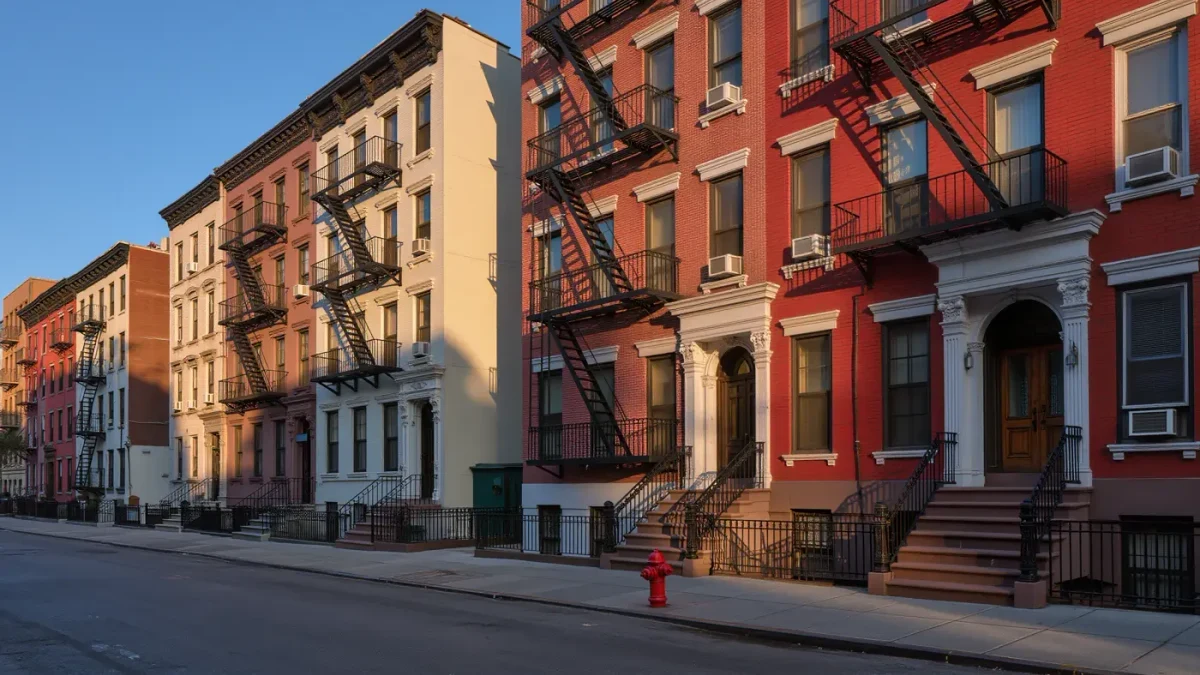
Yes, from the sidewalk. According to the chronology on the artist's estate website, Neel moved to Spanish Harlem in 1938, to an apartment at 8 East 107th Street, and relocated within the neighborhood in 1940 to 10 East 107th Street. In 1962 she moved across the park to a larger, lighter apartment at 300 West 107th Street, where she lived and worked until her death in 1984.
None of these addresses is a museum; they are private residential buildings, visible from the street and unchanged in outline from the blocks Neel knew. A walking itinerary that pairs the East 107th Street blocks with the Museum of the City of New York, five blocks north on Fifth Avenue, gives the Harlem years their context; the Upper West Side apartment sits a short walk from the Museum of Natural History, though Neel's own works hang farther downtown and east. Plan the two neighborhoods for different days: the East Harlem blocks read best in morning light, and the Met opens six blocks south of 107th Street on Fifth Avenue for an afternoon of the paintings themselves.
What did Neel paint during her Spanish Harlem years?
The Met framed its 2021 retrospective around the range of Neel's sitters—friends, family members, lovers, poets, artists, and political activists—and much of that range was assembled during the two decades she lived in El Barrio. There she painted the neighborhood's mothers and children, its organizers and its drifters, at a time when few institutions collected work made uptown by a woman in her situation: separated, raising children alone, and working far from the galleries of Fifty-Seventh Street.
The institutional lag was long: the portraits that now anchor museum collections were made decades before museums sought them, and the Met's 2021 retrospective was only the first New York museum survey of the artist in twenty years. The Whitney's collection text notes simply that she painted "hundreds" of such sitters over a career stretching from the 1920s to the 1980s. Visitors tracing that history uptown will find the exteriors largely unchanged, even as the paintings made inside them have become fixtures of Manhattan's museum collections.
Where to see Alice Neel in New York: practical notes
- Metropolitan Museum of Art, 1000 Fifth Avenue—five Neel portraits in the collection, with Elenka (1936) generally installed in the American Wing; check object pages for current locations.
- Whitney Museum of American Art, 99 Gansevoort Street—Self-Portrait (1980) and holdings centered on her portrait practice; display varies by installation.
- Spanish Harlem and the Upper West Side—the exterior of 300 West 107th Street and the East 107th Street blocks, private buildings best seen on a daylight walk; neither is open to the public.
- Museum of the City of New York, 1220 Fifth Avenue at 103rd Street—useful context for the East Harlem neighborhoods Neel painted, five blocks from her first uptown addresses.
No Neel exhibition was announced for New York galleries or museums as of late January 2026; holdings rotate, and display schedules are subject to change. The most reliable single stop for a first-time viewer remains the Met, where at least one Neel portrait is usually on view in the American Wing. A second visit to the Whitney rewards the approach: its holdings emphasize the late, psychologically raw end of the career, and the two museums' selections together cover nearly every period of the artist's working life.