Jackson Pollock's drip paintings are permanent New York infrastructure. The Museum of Modern Art describes its Pollock collection as unparalleled, and it includes One: Number 31, 1950, among the largest drip paintings ever made, and Number 1A, 1948, donated by the artist's widow; the Metropolitan Museum of Art holds Autumn Rhythm: Number 30, 1950 at the center of a four-painting group. Both museums stand on the same avenue system, thirty blocks apart.
Pollock (1912–1956) made the decisive work in a Long Island studio—canvas laid on a barn floor in Springs, at the island's eastern end, from 1947 onward—but the institutional record was written in Manhattan, where MoMA collected him during his lifetime and Lee Krasner—herself a formidable Abstract Expressionist painter—placed major canvases after his death. The result is that the fullest public account of the drip period anywhere is viewable in two museums on a single avenue system, an arrangement no other city can match.
Which Pollocks does the Museum of Modern Art hold?
MoMA's holdings include One: Number 31, 1950, oil and enamel paint on canvas at roughly eight feet ten inches by seventeen feet five inches, acquired through the Mrs. Simon Guggenheim Fund, and Number 1A, 1948, the dense, hand-marked canvas that carries Krasner's gift line. The museum's artist page credits Krasner directly with much of the posthumous legacy-building, including the donation of major works.
The depth behind the icons was on full view in Jackson Pollock: A Collection Survey, 1934–1954, on view at MoMA from November 22, 2015, to May 1, 2016. The exhibition assembled some fifty-eight paintings, drawings, and prints entirely from the museum's collection, running from 1930s figurative work through the classic drip period. It has closed, but it demonstrated the point that matters to visitors: MoMA can mount a Pollock chronology from its own shelves, and single works from that range rotate through the permanent galleries continuously, and the museum's collection database flags which are up in a given month.
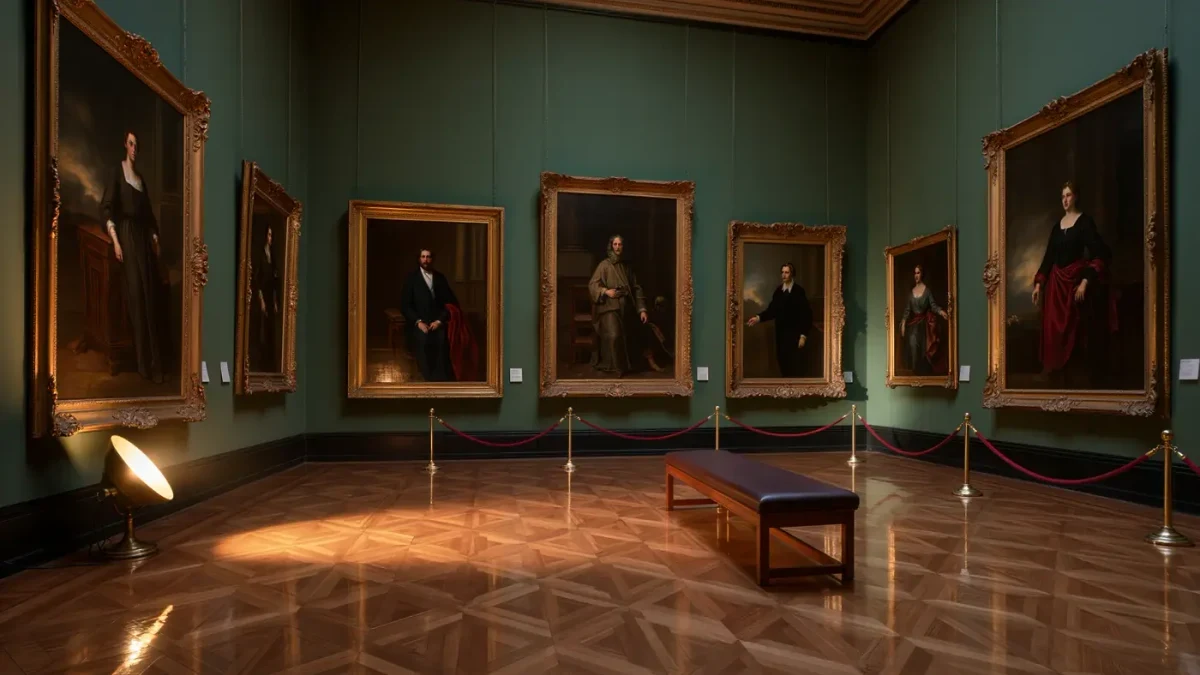
The drip canvases themselves are the museum's most reliable Pollock presence: One: Number 31, 1950 has the wall a seventeen-foot painting requires, and the gallery's bench placement invites the long look the field demands. Visitors planning around a specific canvas should still check the database the week of a visit—rehangs move even the largest paintings.
What does the Metropolitan Museum of Art hold?
The Met attributes 125 works to Pollock in its online database—paintings, drawings, and prints—led by four oils: Autumn Rhythm: Number 30, 1950, the monumental pour painting that anchors the museum's modern galleries; Number 28, 1950, another drip-period canvas from the same year; Pasiphaë (ca. 1943), from the myth-laden period before the drips; and Number 7, 1952, from the black-and-white period that followed the classic years.
Autumn Rhythm is the Met's answer to MoMA's One: Number 31: both were made in 1950, both run more than seventeen feet wide, and both compress the entire method—rhythmic pours, flicked enamel, bare canvas breathing between lines—into a single field. Seeing one without the other is half the argument; the thirty-block stretch of Fifth Avenue between them is the other half.
How did the drip technique actually work?
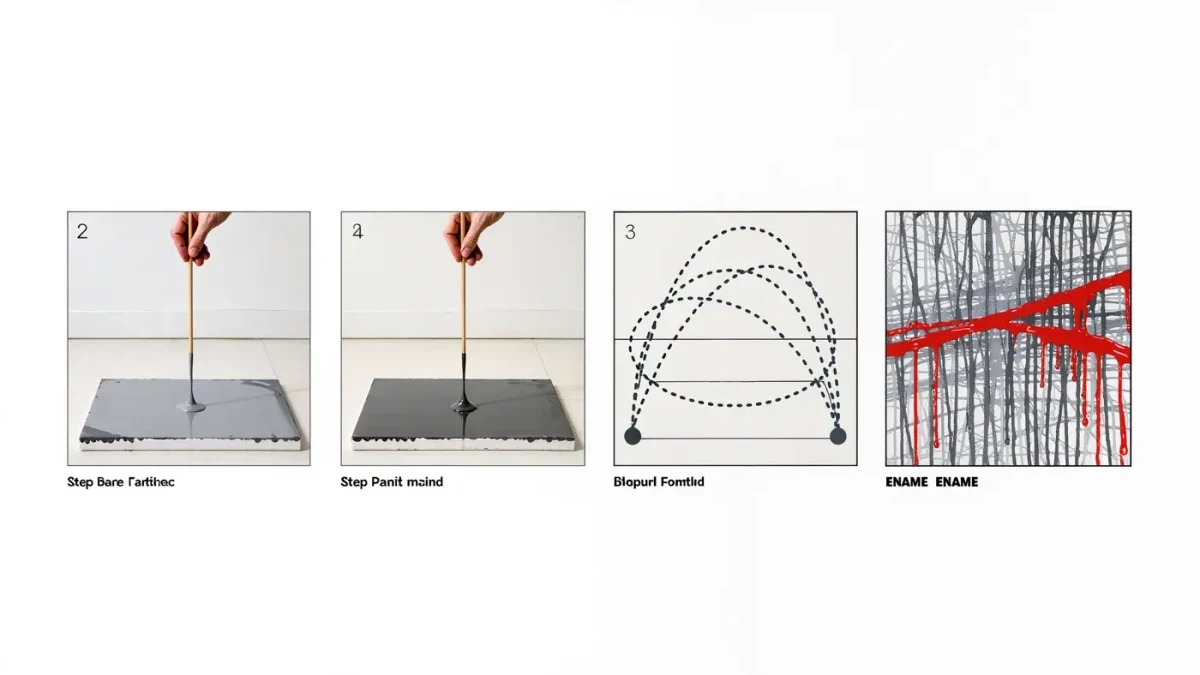
The standard account, drawn from the artist's own practice as documented by the museums that hold the work, runs in four steps. Pollock laid unstretched canvas flat on the studio floor rather than upright on an easel. He swapped brushes for sticks and trowels that could carry paint above the surface without touching it. He moved around and across the canvas, working from all four sides and pouring, dripping, and flinging industrial paint in controlled arcs. And he let the weave of the canvas register every gesture, so that the finished field reads as the record of movement rather than as an image of something.
Two consequences follow for the gallery. The paintings have no single correct viewing distance: close, the material is stringy paint on grainy fabric; far, rhythms surface and dissolve; and the middle distance, where most viewers instinctively stop, keeps both readings alive at once. And they reward patience with the edges, where drips run off the field, cigarette ash occasionally settled into the paint, and the canvas's own margin becomes part of the composition—traces of the studio floor that no reproduction carries.
What can be seen beyond the drip period?
Both museums hold the before and after. The Met's Pasiphaë (ca. 1943) belongs to the years when Pollock, fresh from Thomas Hart Benton's studio and in Jungian analysis, filled canvases with mythic beasts and totemic figures; its writhing line carries the same nervous energy the drips would later organize. The Met's Number 7, 1952 documents the turn to black poured enamel on raw canvas that followed the classic period, as the color drained from the work and the line sharpened.
MoMA's range is wider still: the 2015–16 survey drew entirely on its shelves to run from 1934 figuration through 1954, and works from the early periods rotate through the permanent galleries alongside the icons. Visitors who know only the drips will find the museums holding the whole arc, including the troubled, figurative beginnings that made the breakthrough legible as one.
Why did Lee Krasner matter to where the paintings hang?
After Pollock's death in a 1956 car crash, Krasner managed the estate for the three decades she outlived him, and she placed work strategically in public collections rather than letting it scatter entirely to market. MoMA's artist page states the outcome plainly: she did much to further his legacy, including donating major works to what it calls the museum's unparalleled Pollock collection. Number 1A, 1948 carries that history in its credit line, and the depth of MoMA's works on paper—surveyed in bulk only in 2015–16—reflects the same stewardship.
Krasner's own paintings, it should be said, hang in the same city; a Pollock itinerary that ignores her half of the story is an incomplete one. Her stewardship extended beyond gifts: the estate's control of loans and reproductions shaped which canvases museums could show and how the work was photographed, and by extension how the drip period entered the public imagination. The placement visitors encounter today—two museums, one avenue, all within a mile—is her doing as much as anyone's.
Where to see Jackson Pollock in New York: practical notes
- Museum of Modern Art, 11 West 53rd Street—One: Number 31, 1950 and Number 1A, 1948 in the collection, with early and late work rotating nearby; check the collection database for current gallery assignments.
- Metropolitan Museum of Art, 1000 Fifth Avenue—Autumn Rhythm: Number 30, 1950 with three further Pollock oils spanning 1943 to 1952; the museum's object pages list current gallery locations.
- Combining both—MoMA at Fifty-Third Street, the Met at Eighty-Second and Fifth: roughly a mile and a half apart on one avenue; combine them in one afternoon, Pollock first, comparison second.
Both museums' galleries are subject to change, and neither had a special Pollock exhibition running as of mid-June 2026. The permanent collections are the destination, and between them they hold the largest concentration of the artist's work anywhere—an entire career, from Benton-school figuration to the last black pours, inside a single mile of Fifth Avenue.