Kara Walker's New York record runs from the collection to the street. The Metropolitan Museum of Art holds twenty-six Walker works, including the fifteen-print portfolio Harper's Pictorial History of the Civil War (Annotated) (2005); the Whitney Museum of American Art gave her the city's major survey in 2007–08; and Creative Time's A Subtlety at Brooklyn's Domino Sugar Refinery drew more than 130,000 visitors in two months of 2014. Her New York gallery, Sikkema Jenkins & Co., has shown her work since the late 1990s.
Walker (born 1969) works in cut-paper silhouette, drawing, printmaking, film, and large-scale installation, using antebellum and Reconstruction-era imagery to examine slavery, race, and the American historical imagination. The career trajectory is tied to New York institutions: the silhouette installation that made her reputation appeared while she was still in her twenties, and the Whitney's survey followed within a decade.
What does the Metropolitan Museum of Art hold?
The Met's online collection database attributes twenty-six works to Walker. The largest group is Harper's Pictorial History of the Civil War (Annotated) (2005), a portfolio of fifteen large prints in which Walker overlaid her black silhouettes—nooses, fleeing figures, grotesques—onto enlarged scenes from the nineteenth-century illustrated volume whose title it borrows. Individual sheets such as Exodus of Confederates from Atlanta, Cotton Hoards in Southern Swamp, Banks's Army Leaving Simmsport, and Signal Station, Summit of Maryland Heights circulate in the database alongside the portfolio record, each pairing a Civil War battle scene with an intruding silhouette presence.
The holding also includes Freedom, a Fable (1997), an accordion-folded artist's book that stages a shadow-play narrative of emancipation; Untitled (Girl and Horse) (1996), a cut-paper work; and prints including African/American (1998) and Resurrection Story with Patrons (2017). Works on paper appear on the museum's rotation calendar rather than as standing display, so the database, not the wall, is the reliable guide.
Why can't the Met's Walkers always be seen?
Ink, paper, and cut silhouettes are light-sensitive, and museums rotate works on paper on schedules measured in weeks, not years, to slow fading. The practical consequence is that a Walker visit to the Met is database-driven: the collection search shows what is up in the drawings and prints galleries at any moment, and a portfolio like Harper's Pictorial History is usually shown a few sheets at a time rather than complete. The book works, such as Freedom, a Fable, surface principally in study-room appointments and specialized exhibitions.
None of this makes the holding theoretical. Over the course of a typical year the Met's rotation brings at least part of the Walker group onto public view, and the portfolio in particular has functioned as a teaching staple for the museum's study centers. Visitors who want a complete sheet-by-sheet look can consult the portfolio through the museum's published records, which reproduce all fifteen pairings.
What was the Whitney's 2007 survey?
Kara Walker: My Complement, My Enemy, My Oppressor, My Love ran at the Whitney Museum of American Art from October 11, 2007, to February 3, 2008. Organized by the Walker Art Center in Minneapolis, it was her first full-scale museum survey, and its New York stop introduced the full range of the silhouette installations to a broad audience.
The checklist included Gone, An Historical Romance of a Civil War as It Occurred Between the Dusky Thighs of One Young Negress and Her Heart (1994), the cut-paper frieze that launched the artist's career shortly after her graduate studies and helped earn her a MacArthur Fellowship in 1997. The exhibition's title phrase—four nouns cycling through intimacy and violence—has served as shorthand for Walker's project ever since.
How did Gone make Walker's name?
Gone, An Historical Romance of a Civil War as It Occurred Between the Dusky Thighs of One Young Negress and Her Heart (1994), a room-length frieze of black cut-paper silhouettes installed along a gallery wall, was made shortly after Walker completed her graduate degree, and it is the work with which every account of her career begins. Within three years she had received a MacArthur Fellowship, and within a decade the Whitney's full survey; the silhouette format it perfected—romantic scene-setting invaded by violence, rendered in the polite medium of the parlor wall—has been her principal language since.
Readers of the 2007–08 exhibition's catalogue will find the frieze at both ends of the story: as the young artist's intervention and as the historical axis around which the mature work turned.
What was A Subtlety at the Domino Sugar Refinery?
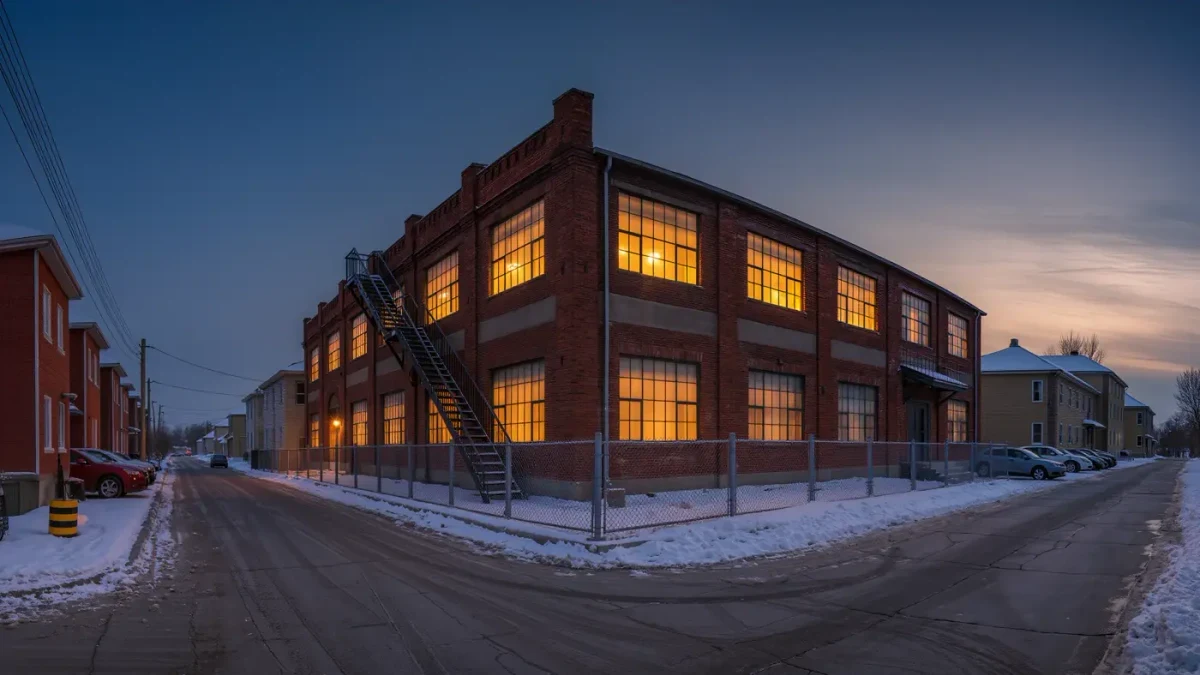
In May 2014, Creative Time—the New York public-art organization—installed Walker's A Subtlety, or the Marvelous Sugar Baby, an Homage to the unpaid and overworked Artisans who have refined sweet tastes from the cane fields to the Kitchens of the New World inside the former Domino Sugar Refinery in Williamsburg, Brooklyn, before the landmark's redevelopment. The work: a monumental sphinx coated in white sugar, filling the refinery's cathedral-scale interior, its full title an homage to the unpaid and overworked artisans who refined sweet tastes from cane fields to kitchens. Visitors walked the factory floor around the sculpture rather than viewing it from a fixed point, an arrangement the derelict building itself dictated.
The project ran through July 6, 2014, and by Creative Time's count drew more than 130,000 visitors to an industrial site that had never functioned as a museum. Photographs, not the work itself, are what remains; the sphinx was destroyed with the installation's close, by design, and the Domino complex has since been redeveloped. For New York, A Subtlety stands as the largest single work by Walker the city has hosted.
Where else has Walker shown in New York?
Walker's longtime New York gallery is Sikkema Jenkins & Co. in Chelsea, which has presented her work in repeated solo exhibitions, including a 2020 show documented on the gallery's site. Gallery exhibitions remain the most reliable recurring venue for new work between museum projects; admission is free, and the gallery's online archive is the best public record of what has been shown and when. For visitors timing a trip around Walker specifically, the gallery calendar is the first thing to check and the museum databases the second.
The museum record since the Whitney survey has favored projects elsewhere—public commissions and European retrospectives—but New York's holdings continue to surface periodically: the Met's portfolio and book are the standing core, and any large thematic exhibition of American art on slavery and its imagery tends to borrow from the city's stores.
Where to see Kara Walker in New York: practical notes
- Metropolitan Museum of Art, 1000 Fifth Avenue—twenty-six works in the collection, led by the 2005 Civil War portfolio; display rotates, so search the collection database before visiting.
- Sikkema Jenkins & Co., 530 West 22nd Street, Chelsea—the artist's New York gallery; exhibitions are free and open during regular hours, with current shows listed on the gallery site.
- Domino Sugar Refinery site, South Williamsburg—the exterior of the redeveloped complex where A Subtlety stood in 2014; nothing of the work remains, but the waterfront site explains its scale.
As of early May 2026 no Walker exhibition was running at a New York museum; the Met's holdings rotate and gallery programming changes seasonally, so all display details above are subject to change.