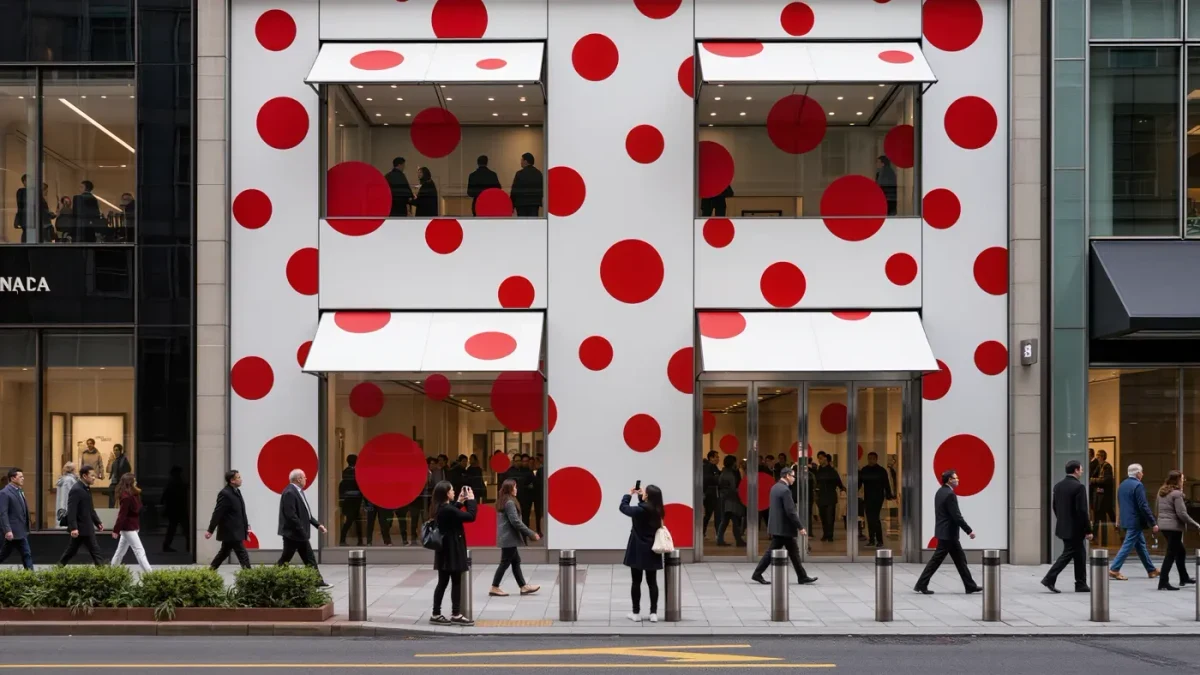
Yayoi Kusama's New York footprint divides between the collection and the queue. The Museum of Modern Art lists 112 Kusama works in its online collection, from Infinity Nets (1951) to the stuffed-fabric Accumulation No. 1 (1962); David Zwirner, her Chelsea gallery since 2013, mounted six solo exhibitions of her work between 2013 and 2023, several built around Infinity Mirror Rooms; and the New York Botanical Garden's KUSAMA: Cosmic Nature spread her sculptures and installations across its 250-acre Bronx grounds in 2021.
Kusama (born 1929) has been a recurring New York presence since her first arrival in the city in the late 1950s, first as a young artist in a Manhattan studio and, across the past decade, as the maker of the city's most reliably oversubscribed exhibitions. The pattern holds: museum holdings anchor the historical work, while the immersive installations—mirror rooms, infinity nets, polka-dot environments—arrive as timed-entry events that sell out and close. As of May 2026 she lives and works in Tokyo, in her tenth decade.
What does the Museum of Modern Art hold?
MoMA's online collection lists 112 Kusama works. The earliest group begins before the New York years: Infinity Nets (1951), an ink-on-paper field of repeated arcs, was made in Japan and carries the motif that her arrival in New York, in the late 1950s, would scale up; No. F. (1959), oil on canvas, belongs to the debut body of monochrome net paintings she produced in her first Manhattan studio years; and Accumulation No. 1 (1962), the sewn and stuffed fabric armchair that MoMA identifies as her first soft sculpture—furniture swallowed by hand-sewn phallic protrusions, the beginning of the Accumulation series.
Because the holdings span oil paintings, ink works on paper, sewn sculpture, and artists' books, they function as a compressed retrospective of the 1950s and 1960s, the decades Kusama spent in New York before returning to Japan in the 1970s. The figure of 112 refers to works published in the online collection; the museum's study collection beyond it is deeper. For visitors, the practical reading is that MoMA can mount a Kusama room from its own shelves at will, and periodically does. What hangs at a given moment rotates; the collection database shows current display, and the accumulation sculptures in particular appear periodically in the contemporary galleries.
What should first-time viewers know about the nets?
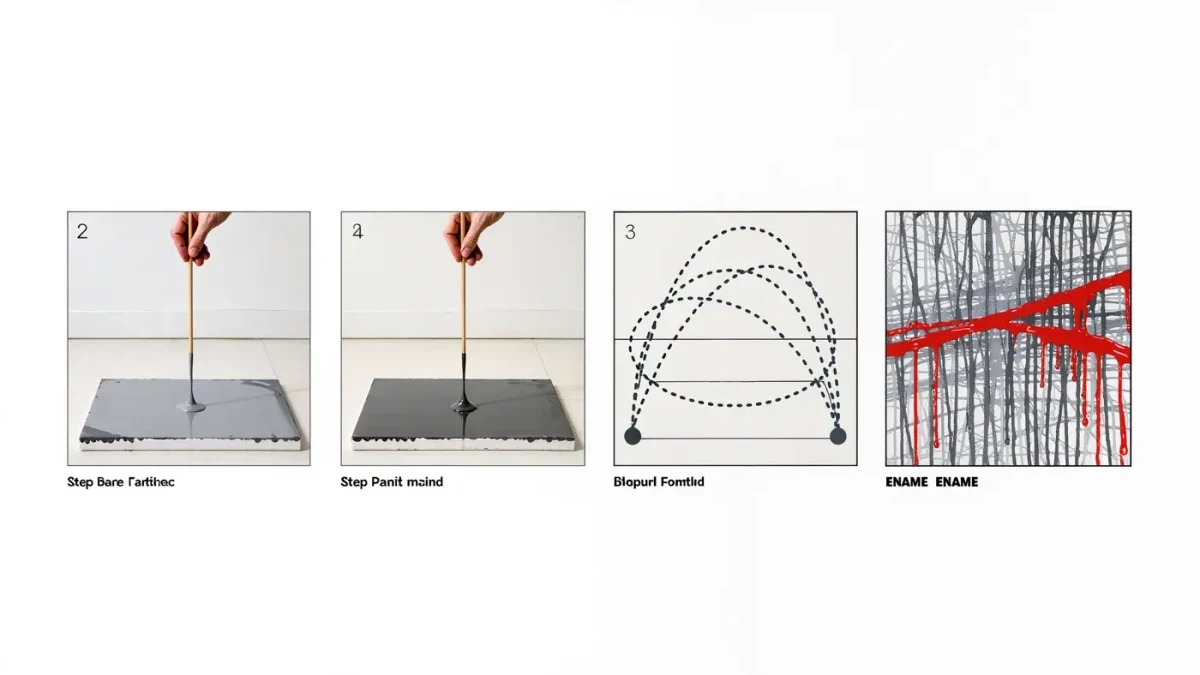
The Infinity Nets paintings—the motif that opens MoMA's group—are near-monochrome surfaces built from thousands of small repeated arcs, and they defeat photography: the nets read as texture at a distance and as obsessive mark-making up close, and the difference is the point. Kusama painted them across ever-larger canvases through the early 1960s, turning a single gesture into environment-scale fields. Viewers give them the same slow, close attention the mirror rooms demand for the opposite reason: instead of infinite reflection, the nets offer infinite accumulation on a flat surface.
Where have Infinity Mirror Rooms appeared in New York?
The reliable venue has been David Zwirner in Chelsea, which has represented Kusama since 2013 and presented six solo exhibitions of her work through 2023, several with mirror rooms at their center. The first, Yayoi Kusama: I Who Have Arrived in Heaven (November 8–December 21, 2013), spanned the gallery's three West 19th Street spaces and introduced Infinity Mirrored Room—The Souls of Millions of Light Years Away (2013), an LED-lit reflective box entered a few viewers at a time.
The pattern repeated at roughly two-year intervals: Festival of Life in 2017, again across three New York spaces, and Every Day I Pray for Love (November 9–December 14, 2023) at 537 West 20th Street, which added a new infinity room to the roster. According to the Smithsonian's Hirshhorn Museum and Sculpture Garden, which maintains a research guide to the works, Kusama has produced more than twenty distinct Infinity Mirror Rooms—far more than any single city can hold, which is why they travel and recur rather than sit in one collection.
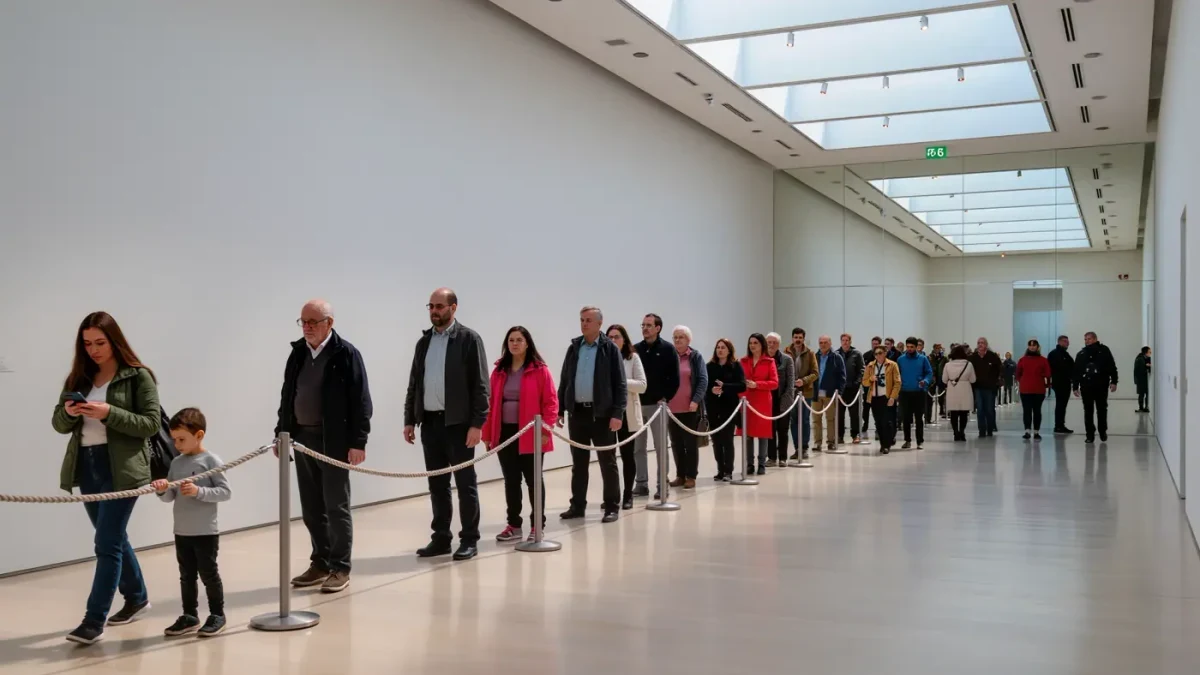
The viewing condition is part of the work's fame. Mirror rooms admit visitors in small, timed groups—often a few at a time, for well under a minute—lines form even with ticketing, and the rooms close with the exhibitions that contain them; a New York showing is an event rather than a standing display. Admission arrangements have varied from run to run, and the gallery's site specifies each one. The gallery's exhibition archive lists past installments, and its announcement pages are the place to watch for the next one.
What was KUSAMA: Cosmic Nature at the Botanical Garden?
From April 10 to October 31, 2021, the New York Botanical Garden in the Bronx devoted its grounds and conservatory to KUSAMA: Cosmic Nature, installing her sculptures, installations, and new nature-derived works across the grounds—including the polka-dotted trees along the garden's axes and Dancing Pumpkin, the yellow-dotted bronze-scale arachnopumpkin installed on the lawn. The exhibition, originally scheduled for 2020 and postponed by the pandemic, ran for nearly seven months across the growing season.
The garden framed the show around what it described as Kusama's lifelong dialogue with the natural world, installing new nature-derived works alongside the pumpkins and nets. Cosmic Nature demonstrated the other half of Kusama's appeal: work that survives weather and daylight, and rewards distance rather than enclosure. For visitors who missed the mirror-room cycle, it was the proof that her imagery functions at any scale, from a five-foot net painting to a garden axis.
Why does Kusama's New York presence run in cycles?
Three structural reasons. The museum holdings are historical and finite—MoMA's 112 works cover the founding decades, and the immersive work came later. The mirror rooms are architectural and editioned, touring internationally rather than accumulating in one place. And the demand—familiar to anyone who has joined a Kusama line since 2013—pushes venues toward timed tickets and finite runs, which in turn create the cycle of announcement, sellout, and closure that has governed the last decade.
For the visitor, the practical implication is to separate the two trips. The historical work is viewable whenever it rotates onto MoMA's walls; the immersive work requires catching a run while it is open. Checking the gallery's and museums' current pages—rather than any standing itinerary—is the reliable method.
Where to see Yayoi Kusama in New York: practical notes
- Museum of Modern Art, 11 West 53rd Street—112 works in the online collection, led by the 1950s–60s net paintings and Accumulations; display rotates, so search the collection database for what is on view.
- David Zwirner, West 19th and West 20th Streets, Chelsea—six solo exhibitions of the artist's work between 2013 and 2023, several with Infinity Mirror Rooms; the gallery's archive documents past shows and its site announces new ones.
- New York Botanical Garden, 2900 Southern Boulevard, the Bronx—site of KUSAMA: Cosmic Nature, April 10–October 31, 2021; no Kusama works remain installed.
As of late May 2026 no Kusama exhibition was running in New York; mirror-room showings recur rather than sit, and all listings above are subject to change. The museum collections remain the standing holdings between runs, and the two kinds of visit reward different planning: one is a matter of checking a database and walking in, the other of watching an announcements page and moving quickly.