Between June 2021 and May 2022, the official portraits of Barack Obama by Kehinde Wiley and Michelle Obama by Amy Sherald traveled to five American museums, from the Art Institute of Chicago to the Museum of Fine Arts, Houston. The tour, organized by the Smithsonian's National Portrait Gallery, shows how exhibitions travel between museums: on venue contracts, courier escorts, insurance and condition reports.
The New York leg ran at the Brooklyn Museum from August 27 to October 24, 2021, with timed tickets required, according to the museum's exhibition page. Nearly every large temporary exhibition at a New York museum follows some version of that same machinery, whether it arrives from another continent or from a gallery across town.
What actually travels when an exhibition goes on tour?
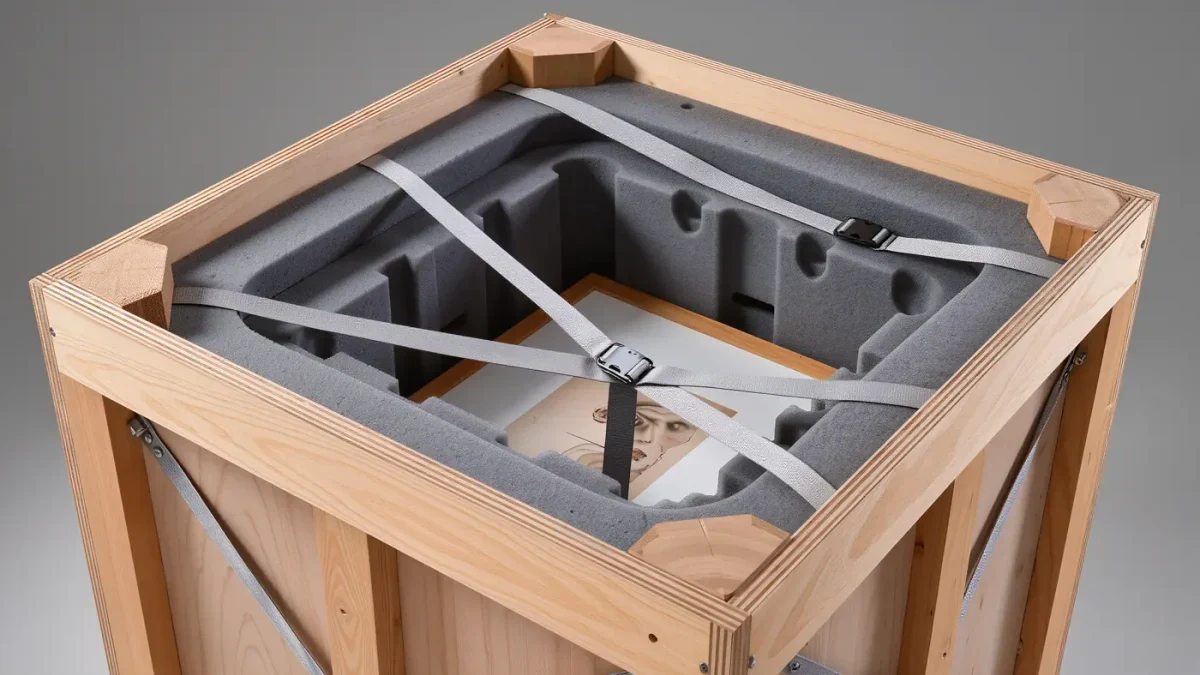
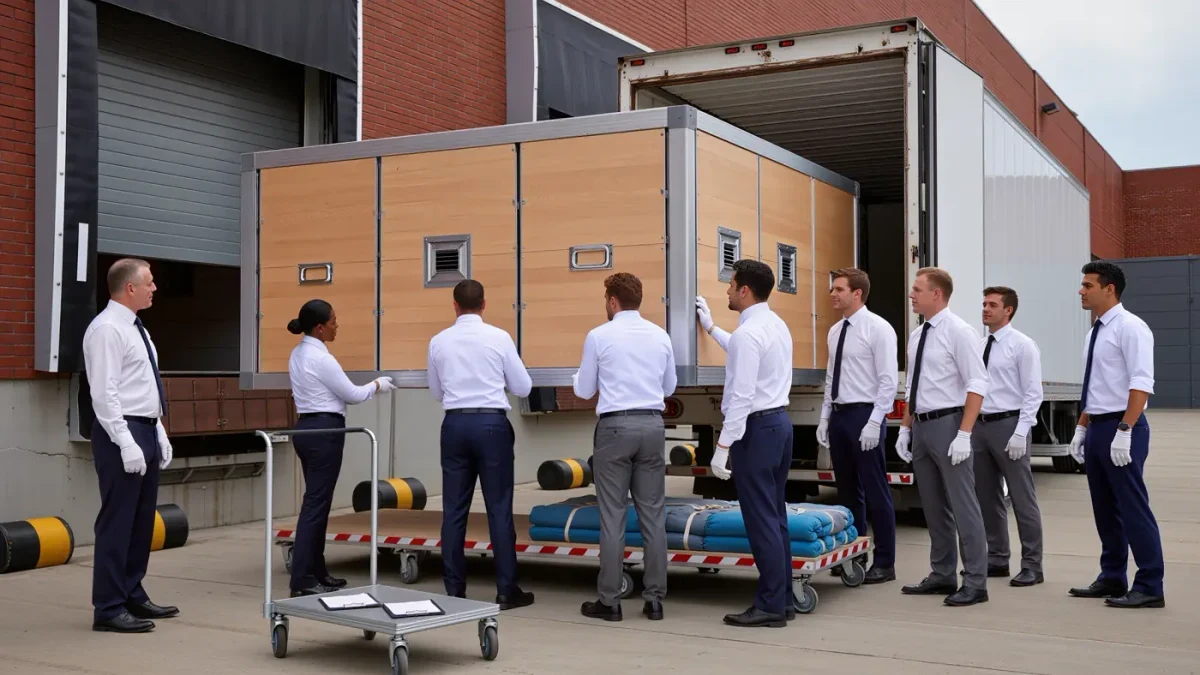
The short answer is crates, and a great many of them. Paintings travel in custom-built wooden crates with cushioned interiors; sculptures and fragile objects are packed in fitted foam cavities, soft-wrapped and braced so that nothing shifts in transit. Climate-controlled trucks and air freight keep temperature and humidity within the ranges lenders specify. What surrounds the art is engineered for each object, which is one reason a large show can spend weeks in packing alone.
Moving it all are registrars and art handlers. Registrars are the museum staff who manage collection records, loans and shipping logistics; handlers are the trained crews who load, carry and install. Their work is deliberately unobtrusive, and museum visitors almost never see it, because it happens at loading docks, in freight elevators and during the closed days before an opening.
Who decides where a touring exhibition goes?
The organizing institution does. A museum that builds a touring exhibition books partner venues years in advance, negotiating a venue agreement for each stop that fixes the calendar, the fees and the division of responsibilities: who pays for shipping, who provides couriers, who handles installation labor and security. Tours are commonly scheduled in legs of roughly nine to thirteen weeks, which is long enough to justify the freight and short enough to let several museums share one packing effort.
The Obama portraits illustrate the rhythm. Per the Smithsonian's National Portrait Gallery, the five-city tour ran from June 2021 through May 2022: the Art Institute of Chicago from June 18 to August 15, 2021, the Brooklyn Museum from August 27 to October 24, 2021, the Los Angeles County Museum of Art from November 7, 2021 to January 2, 2022, the High Museum of Art in Atlanta from January 14 to March 20, 2022, and the Museum of Fine Arts, Houston, in spring 2022.
What is a condition report?
A condition report is the written and photographic record of an object's physical state at each stage of a tour. Before a work leaves a lender, it is examined and documented. It is examined again when the crate is opened at the receiving museum, before installation, after de-installation and on return. If a tear, a loss or a change in a painted surface appears, the reports establish when it happened and who had custody.
This is the quiet spine of every loan: the paperwork travels with the art, and both venue registrars walk the galleries checking each object against its photographs. Disputes are rare precisely because the documentation is so granular. For visitors, none of this is visible, but every label that reads "private collection" or "courtesy the artist" represents a chain of these reports.
Why do couriers fly with the art?
Because lenders often insist on it. A courier is a registrar, conservator or other museum professional who accompanies the crates from door to door, supervises their handling at every transfer and stays until the works are installed, or packed again for departure. The practice maintains an unbroken chain of custody, which is what loan agreements and insurers generally require.
Couriers ride in the truck, sit through the loading and watch the crate open. For sensitive works, loan terms may specify that only the courier's institution is permitted to unpack an object, or that the courier must be in the room during installation. It is a mundane form of vigilance, and it is one of the costs a borrowing museum budgets for when it signs a venue agreement.
How is a touring exhibition insured?
Usually wall to wall. So-called nail-to-nail coverage, a term registrars use for insurance that runs from the moment a work leaves the lender's wall until it returns, is the standard arrangement for loans. Depending on the contracts, the policy may be carried by the organizing museum, shared among venues or taken on by each borrower for its leg of the tour.
The declared values are confidential, which is why museums almost never confirm what a loan is insured for. What is public is the practical consequence: insurance, freight and courier costs are the reason a single touring exhibition can consume a large share of a borrowing museum's temporary exhibition budget before a single wall is painted.
What did a recent tour through New York look like?
A useful example is Amy Sherald: American Sublime, a survey of roughly fifty paintings organized by the San Francisco Museum of Modern Art. Per the Whitney Museum of American Art's exhibition records, the New York presentation ran from April 9 to August 10, 2025, organized for the Whitney by curator Rujeko Hockley. The exhibition then continued to the High Museum of Art in Atlanta, which opened its presentation in fall 2025, with a separate exhibition ticket required for entry, according to the High's listing.
One show, three museums, three sets of install crews, three runs of condition reports. Visitors who saw the survey in Manhattan and later read about its Atlanta opening were watching the same crates make the same trip the Obama portraits made four years earlier, on the same kind of paperwork.
How can a visitor tell that a show is a tour?
The credit panel gives it away. Touring exhibitions are announced as "organized by" one institution, and wall texts frequently note that the presentation "follows" an earlier run elsewhere. Local curators are credited with the presentation rather than the organization, and the catalogue often lists several venues on its imprint page with their respective dates.
A second sign is timing. When a New York museum advertises an exhibition that is simultaneously listed on another museum's calendar for later in the year, the two dates are legs of one itinerary that was negotiated, insured and crated long before either public announcement.
What should visitors check before a tour stop?
- Dates of the local leg. Tour stops are fixed by contract and are rarely extended; closing dates are firm.
- Timed ticketing. High-demand tours, like the Obama portraits in Brooklyn, have used timed entry, so booking a slot in advance avoids the line.
- What is included. Some tours are covered by general admission and others require a separate exhibition ticket, as at the High's presentation of the Sherald survey.
- Later legs. If a show is missed in New York, the organizing museum's page usually lists the remaining venues and their dates, though all details are subject to change.
What are the practical details?
Touring exhibition example: Amy Sherald: American Sublime — organized by the San Francisco Museum of Modern Art; presented at the Whitney Museum of American Art, New York, April 9–August 10, 2025; presented at the High Museum of Art, Atlanta, from fall 2025. Admission: the Whitney presentation was included with museum admission; the High's presentation required a separate exhibition ticket. Hours, dates and prices at all venues are subject to change; check current museum listings before visiting.