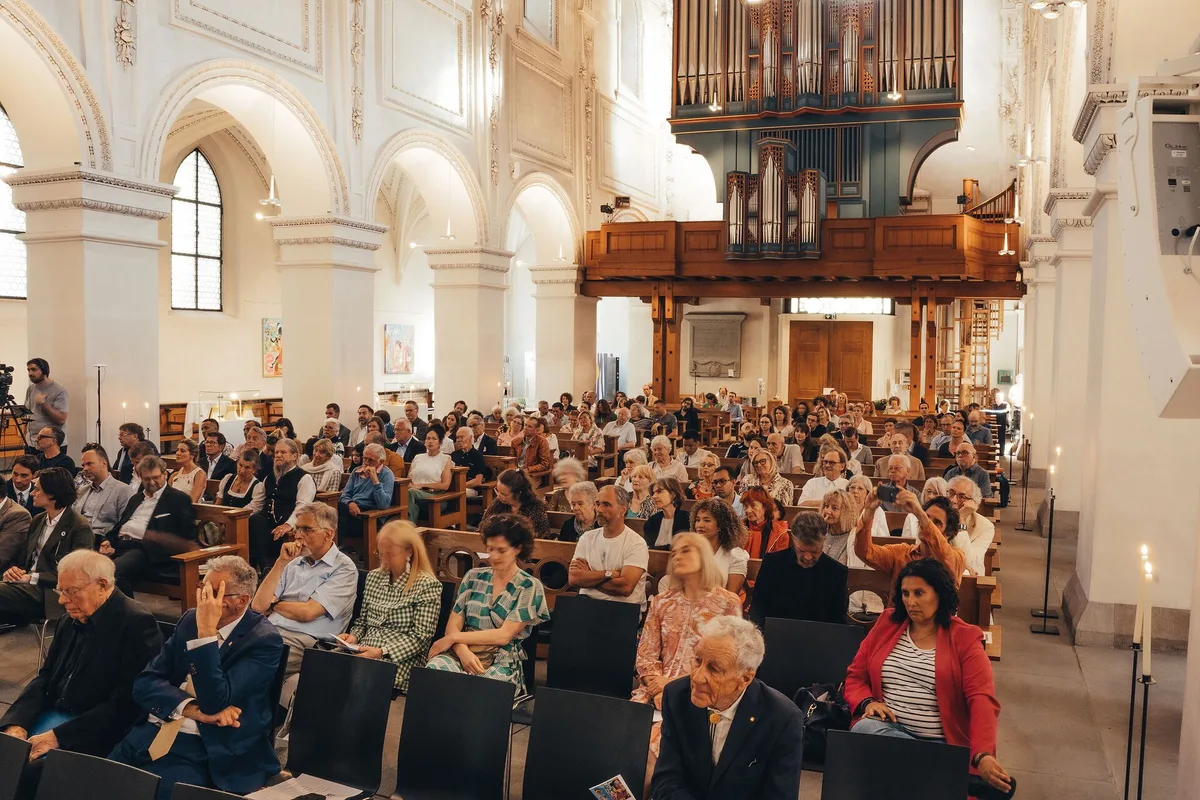
You got invited to an opening. Or you walked past a gallery on a Thursday night and found a crowd spilling onto the sidewalk, glasses in hand. Opening receptions look like parties, but they have a job to do. Knowing that job tells you whether you should be there.
Here is what an opening reception really is, where the tradition comes from, and the honest cases for going or staying home.
What an Opening Reception Is
An opening reception is a preview of an art exhibition held before the formal opening. The traditional name for it is a vernissage, a French word, and if the preview is not open to the public but only to invited guests, it is often called a private view. In plain terms: the art is already on the walls, the show is not officially open yet, and a chosen crowd walks through first. Some previews welcome anyone, while others are strictly guest lists, so always check which kind you are facing.
Where the Tradition Comes From
The custom is older than it looks. At official exhibitions in the nineteenth century, such as the Royal Academy summer exhibition, artists would give a finishing touch to their works by varnishing them. Patrons and the elite would visit the academies on varnishing day, before the formal opening of the exhibition. That habit grew into the tradition of celebrating the completion of an art work, or a series of art works, with friends and sponsors. The party started as a working visit, and the celebration arrived as a natural addition. This connects to our earlier piece, How New York's art fair weeks now work.
What It Is Actually For
Today an opening serves the social and business side of art. In the twentieth century, the vernissage became an opportunity to market the works on view to buyers and critics. That role has stuck. An opening is for the gallery to build early interest, for collectors to see and buy first, for critics to form first opinions, and for artists to meet the people who support them. It is also, quite simply, networking. If you want to meet artists or understand the local scene, an opening is the easiest door in.
When to Skip It
The same crowd that makes an opening lively also makes it hard to see art. If your goal is quiet looking, skip the reception and go during regular hours, when the rooms are calm and the staff has time to talk. Skip it too if big groups drain you, or if you only care about one artist and not the social side. And remember that a show runs for weeks. The art does not change after opening night, so missing the party means missing very little. Readers following this should also see What the Spring/Break Art Show actually is.
A Middle Path
You do not have to pick a side. Some visitors arrive early, catch the artist's short talk, and leave before the room fills. Others wait a day and email the gallery for a calm walkthrough. Note that exhibitions also end with a ceremonial closing event, sometimes called a finissage, and larger shows may hold an event halfway through called a midissage. Those gatherings are usually far quieter than an opening, and they can be a nicer way to say goodbye to a show you loved.
Conclusion: Go for People, Skip for Looking
An opening reception is a preview with a purpose: first views, first sales, first opinions, and first meetings. If you want any of those, go and enjoy it. If you want the art itself, a quiet weekday visit will show you more. Choose based on what you want from the hour, and either way you will not be wrong.