More than 1,800 works from five continents went back on view at the Metropolitan Museum of Art on May 31, 2025, when the Michael C. Rockefeller Wing reopened after a transformation begun when the galleries closed in 2021. According to the museum's press release of May 28, 2025, the reimagined wing presents the arts of Africa, the Ancient Americas and Oceania in rebuilt galleries with a sloping glass wall along the south facade, facing Central Park.
The wing, which first opened in 1982, is named for Michael C. Rockefeller, son of the collector and later vice president Nelson A. Rockefeller, whose announced gift of his collection of African, Oceanic and pre-Columbian art in 1969 anchored the museum's holdings in these fields. The reopening, marked by a daylong festival, is the largest reinstallation of non-Western art at the museum in a generation.
What is in the wing, floor by floor?
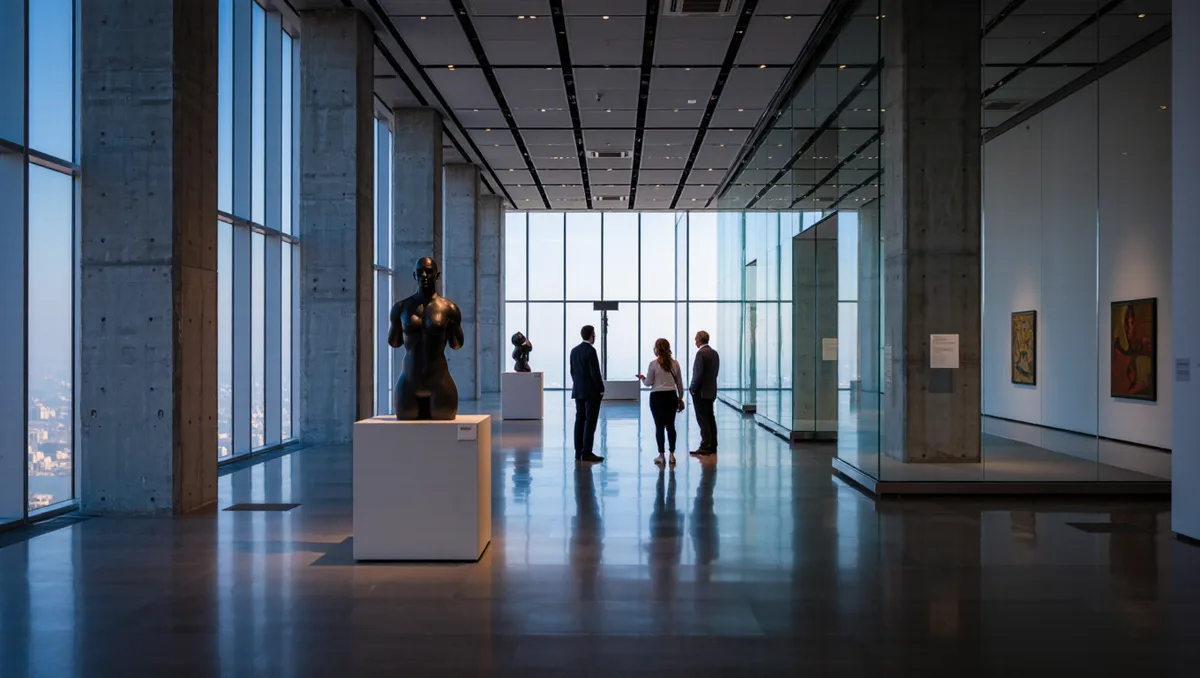
Three departments, three contiguous worlds. The wing is organized by region rather than by chronology across regions: African art in one suite, the art of the Ancient Americas in another, and the art of Oceania in a third, each with its own curators, wall colors and case language. The renovation, by WHY Architecture, led by Kulapat Yantrasast, with Beyer Blinder Belle, rebuilt the galleries and replaced the wing's 1982 facade with the sloped glass wall that now opens the suites to the park's greenery.
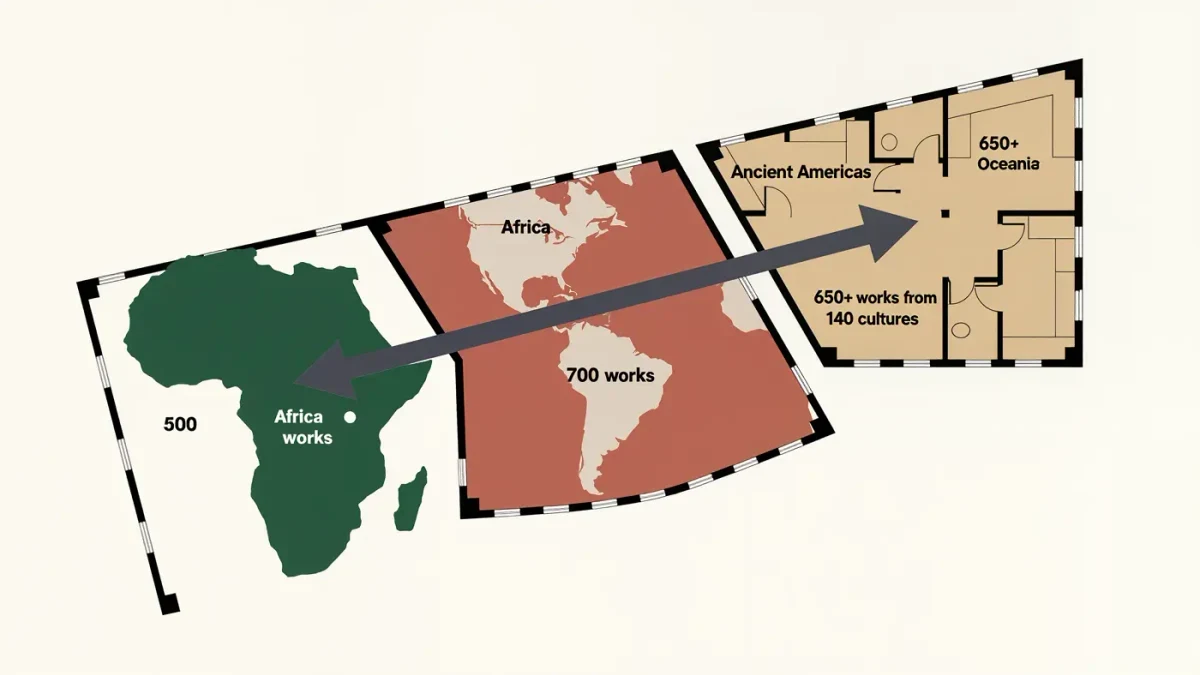
The numbers give the scale: approximately 500 works of African art, around 700 works of Ancient American art made before 1600 CE, and more than 650 works of Oceanic art from some 140 cultures. Together they are billed by the museum as a presentation of five millennia of the world's art.
The facade is part of the reinstallation's argument. Where the 1982 wing met the park with a flat, opaque wall, the new sloping glass draws daylight and greenery into suites that were previously lit from above and inward. Visitors will notice the change most in the Africa galleries, where the wall frames the park behind the works, and along the wing's diagonal Oceania route, which now ends in light rather than a corner.
How should you route the Africa galleries?
Enter on the African suite and the range is immediately wide. The oldest work on view, per the museum, is a twelfth-century clay figure from Mali; the most recent is Abdoulaye Konaté's textile installation Bleu no. 1, made in 2014 — nine centuries between neighbors. Roughly one fourth of the African galleries' works are new acquisitions on view in the wing for the first time, which makes this the section where returning visitors will find the most unfamiliar material.
Look up as well as around: the galleries' new ceiling baffles are patterned after the wooden beams of the Great Mosque of Djenné in Mali, an architectural quotation that quietly ties the rooms to the works' regions of origin. A slow circuit of the suite takes most visitors under an hour; the new-acquisition labels reward the readers.
What is different in the Ancient Americas galleries?
The centerpiece change is a dedicated gallery for textiles and featherwork — fragile material that the old wing could not exhibit at scale. Around 700 works made before 1600 CE trace the art of Mesoamerica, Central America and the Andes, and the museum emphasizes three thousand years of fiber arts among the continent's artistic traditions, from painted cloth to featherwork of extraordinary preservation.
Textiles rotate more often than stone or ceramics, so repeat visits genuinely see different objects here; if a case is dim, it is deliberate. Visitors pairing the suite with the museum's Ancient American galleries elsewhere in the building should note the distinction: this wing holds the pre-1600 collections; later and North American material lives in other departments.
What survives from the old wing in Oceania?
The most beloved artifacts of the 1982 wing stayed. The painted Kwoma ceiling — the great slit-drum-and-painting assembly from Papua New Guinea that hung over earlier generations of visitors — remains overhead, and the Asmat sculptures are installed along the same reach of the wing. More than 650 works from some 140 Pacific cultures are on view, per the museum.
The reinstallation routes visitors along a diagonal trajectory through the Pacific suites, so the galleries read as a passage rather than a set of rooms. First-time visitors should take the diagonal at museum pace; the Oceanic collections are the wing's most concentrated and reward unhurried looking.
What should not be missed on a first pass?
- The Kwoma ceiling. The painted assembly from Papua New Guinea that anchored the 1982 wing remains overhead in the Oceania suites; stand under it and look up before anything else.
- The Mali clay figure. The oldest work in the wing, twelfth-century, and among the most quietly influential objects in the African collections.
- The textiles and featherwork gallery. New to the wing, dedicated to the fiber traditions of the Ancient Americas, with delicate material rarely seen at this scale.
- Konate's Bleu no. 1. The 2014 textile installation that brings the chronology of the African suite to the present.
Who reorganized the collections?
The transformation was overseen by the wing's curators: Alisa LaGamma, the Curator in Charge of the Department of the Arts of Africa, Oceania, and the Americas; Joanne Pillsbury and Laura Filloy Nadal, curators of the Ancient Americas; and Maia Nuku, curator for Oceania. Their reinstallation argues a single case across three regions — that these holdings belong among the museum's central collections, not in a side wing — and the architecture has been rebuilt to make it.
How long does a visit need, and what does it cost?
Give the wing two hours on a first visit: an hour for the Africa and Ancient Americas suites, another for Oceania at the unhurried pace the diagonal invites. The wing sits at the south end of the museum's first floor, a short walk from the Temple of Dendur in the Egyptian galleries, which makes a combined Africa–Egypt loop one of the building's strongest pairings; both collections speak across the corridor.
Timing matters less here than elsewhere in the building; the wing absorbs crowds well. Weekday mornings are quietest, and the Friday and Saturday late hours turn the glass wall into a lantern over the park at dusk. Families should know the suites reward short visits too; a single-object itinerary, ceiling to figure, works surprisingly well with children.
Admission to the wing is included with museum entry: $30 adults, $22 seniors, $17 students, free for children 12 and under, with pay-what-you-wish entry for New York State residents, per the museum's visit page. The museum remains open until 9 p.m. on Fridays and Saturdays, the quietest time to have the Oceanic galleries nearly to oneself. All hours and prices are subject to change.
What are the practical details?
Venue: The Michael C. Rockefeller Wing, The Metropolitan Museum of Art, 1000 Fifth Avenue at 82nd Street, New York. Dates: reopened May 31, 2025; on view as the permanent collection installation with no closing date. Admission: $30 adults, $22 seniors, $17 students, free for children 12 and under; New York State residents pay what they wish. Hours: open until 9 p.m. Fridays and Saturdays. Details are subject to change; check the museum's current listings before visiting.