Mark Rothko's color-field canvases are concentrated in New York to a degree few twentieth-century painters match. The Museum of Modern Art owns No. 3/No. 13 (1949), the first Rothko it acquired, back in 1952; the Metropolitan Museum of Art lists eighteen Rothko works, seven of them oils; and the Solomon R. Guggenheim Museum holds the monumental Untitled of 1952–53, a canvas nearly ten feet tall and fourteen feet wide. All three museums are within a mile of one another in Manhattan.
Rothko (1903–1970) lived in New York from the 1920s until his death, arriving from Portland, Oregon, by way of Yale, and the city's museums built their holdings during his lifetime and after. The paintings reward exactly the kind of slow, single-room looking that permanent-collection galleries allow—no special exhibition required.
Which Rothkos are at the Museum of Modern Art?
MoMA's anchor is No. 3/No. 13 (1949), oil on canvas, an early example of the stacked color-field structure Rothko would explore for the rest of his career. According to the museum's object page, it entered the collection in 1952—the first Rothko MoMA acquired—via the bequest of Mrs. Mark Rothko through The Mark Rothko Foundation. Standing before it, a viewer sees the format at its origin: two soft-edged rectangles floating over a third, the proportions still experimental.
MoMA also gave Rothko his first major museum retrospective, Mark Rothko: A Retrospective Exhibition, Paintings 1945–1960, on view from January 18 to March 12, 1961, organized with a catalogue by the curator Peter Selz; the show toured internationally through 1963, an unusually long life for a museum retrospective and a measure of the demand for the work even before the classic period had closed. The museum's collection pages list the further Rothkos in its holdings, and at least one canvas is generally installed in the painting galleries, subject to rotation; visitors with a particular painting in mind should check the object page the week of a visit.
What does the Metropolitan Museum of Art hold?
The Met's online database attributes eighteen works to Rothko, seven of them oil paintings spanning his mature period: Untitled (1949), No. 21 (1949), No. 3 (1953), Untitled (1954), No. 13 (White, Red on Yellow) (1958), No. 16 (1960), and Untitled (1964). Read in date order, the group traces the paintings' evolution from the close-valued fields of the late 1940s to the darker, heavier structures of the decade before the artist's death.
No. 13 (White, Red on Yellow) (1958), oil and acrylic with powdered pigments on canvas, belongs to the run of darkening work Rothko made in the late 1950s, the years of the Seagram commission. The group's later end matters for the itinerary. No. 16 (1960) and Untitled (1964) carry the career into the years of narrowed, weightier color that occupied Rothko until his death in 1970, and the Met is the only one of the three museums where that late sequence can be followed across multiple canvases in one collection. Because the museum's modern galleries are rehung periodically, visitors should confirm which paintings are up through the object pages; the holding is deep enough that different visits can surface different work.
The works on paper among the Met's eighteen Rothko objects—drawings and prints—are installed on the department's rotation calendar and appear in dedicated gallery sessions far less often than the oils. For most visitors the paintings are the destination; the database remains the source of truth for both.
What about the Guggenheim's Rothkos?
The Solomon R. Guggenheim Museum's collection includes Untitled (Violet, Black, Orange, Yellow on White and Red) (1949), oil on canvas measuring roughly 207 by 168 centimeters—one of the classic horizontal-band compositions of the pivotal year—and the vast Untitled (1952–53), oil on canvas at nearly ten by fourteen feet, among the largest paintings Rothko realized. An earlier Untitled of 1942 documents the surrealist-inflected phase that preceded the fields.
Seen in the Guggenheim's Frank Lloyd Wright rotunda, a building the museum has occupied since 1959, the scale of the 1952–53 canvas registers before its color does: the viewer stands inside the painting's throw rather than across from it. The earlier Untitled (1942) belongs to the surrealist-inflected phase that preceded the fields, when mythic and biomorphic forms still organized the surface; the museum's collection site pairs it with the later canvases, making the transition legible within one holding. The museum's spiral galleries add their own condition: a Rothko on view is encountered in motion, ascending the ramp rather than stationary before a single wall.
Why did New York museums collect Rothko so early?
The institutional interest began in the artist's own lifetime. MoMA's 1952 acquisition of No. 3/No. 13 came while Rothko was still contesting the terms of his own success, and the museum's 1961 retrospective confirmed the arrival; the Guggenheim's holdings reach back to the same productive years, anchored by the 1949 band composition now on its collection site. The Met's seven oils, by contrast, were assembled across the decades after the painter's death in 1970, tracking the market's and the academy's parallel reassessment.
The result for visitors is an unusual density of first-rank material on one island. Where most American museums hold one or two Rothkos as punctuation, Manhattan's three modern-art institutions hold enough canvases between them to show the format changing year by year—transition works, the classic stacked fields, the darker late paintings that preceded the artist's death.
How should a visitor plan a Rothko day?
The practical answer is that Manhattan makes the comparison easy. MoMA and the Met are both on or near Fifty-Third and Fifth; the Guggenheim is a twenty-minute walk up Fifth Avenue. A workable order, timed to museum hours from ten to five:
- Begin at MoMA at opening for No. 3/No. 13 (1949), the origin point of the format, before the fourth-floor crowds build.
- Walk or take the bus up Fifth Avenue to the Met for the seven-oil sequence, moving chronologically from Untitled (1949) to Untitled (1964).
- Finish at the Guggenheim, ascending the rotunda ramp to the 1952–53 Untitled, so the day ends at the largest canvas.
That arc—transition, classic period, late darkening—is the argument of every Rothko retrospective, assembled here from three permanent collections in a single afternoon of walking.
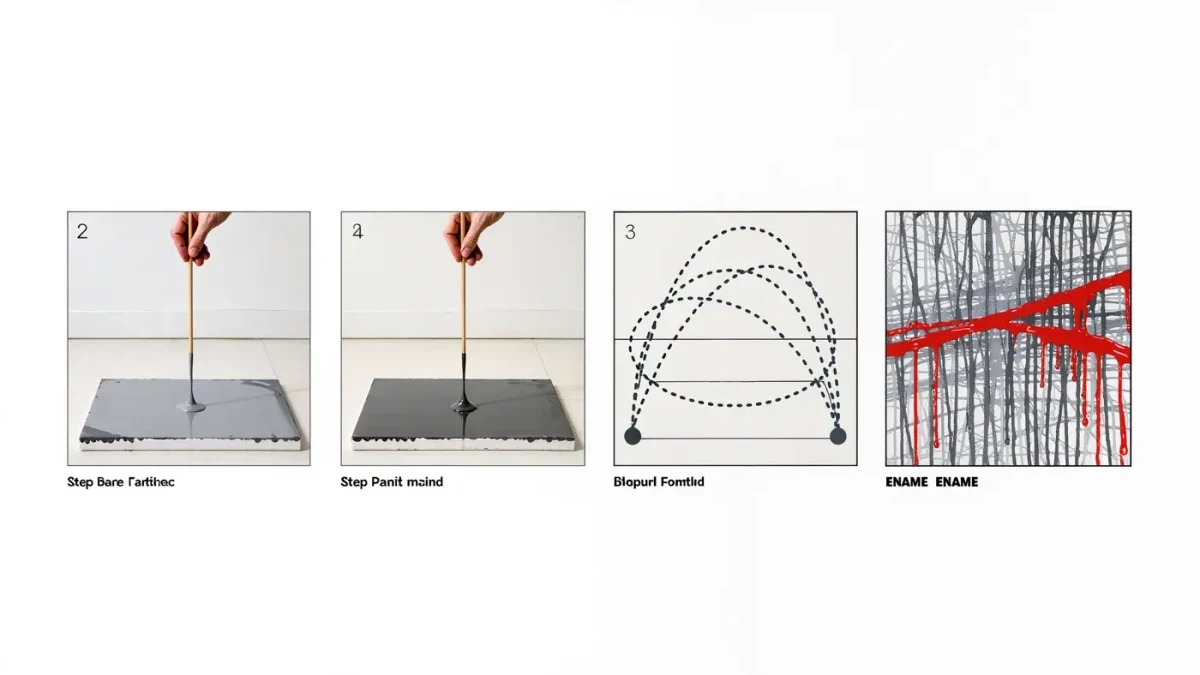
Two viewing notes are worth the walk. First, the classic canvases were made to be seen at close range: the fields open up as the viewer steps toward them, and the edge-to-edge color defeats the across-the-room glance that works for smaller pictures. Second, give each canvas time—the surface is thin, unevenly absorbent, and slower to read than its diagram-like reproductions suggest.
Where to see Mark Rothko in New York: practical notes
- Museum of Modern Art, 11 West 53rd Street—No. 3/No. 13 (1949), the first Rothko acquired (1952), plus further works in the collection.
- Metropolitan Museum of Art, 1000 Fifth Avenue—seven Rothko oils, 1949 to 1964, in the modern and contemporary galleries; check object pages for locations.
- Solomon R. Guggenheim Museum, 1071 Fifth Avenue—Untitled (Violet, Black, Orange, Yellow on White and Red) (1949) and Untitled (1952–53), among others.
Gallery assignments at all three museums are subject to change, and none had a special Rothko exhibition announced as of mid-March 2026. The permanent collections are the show.