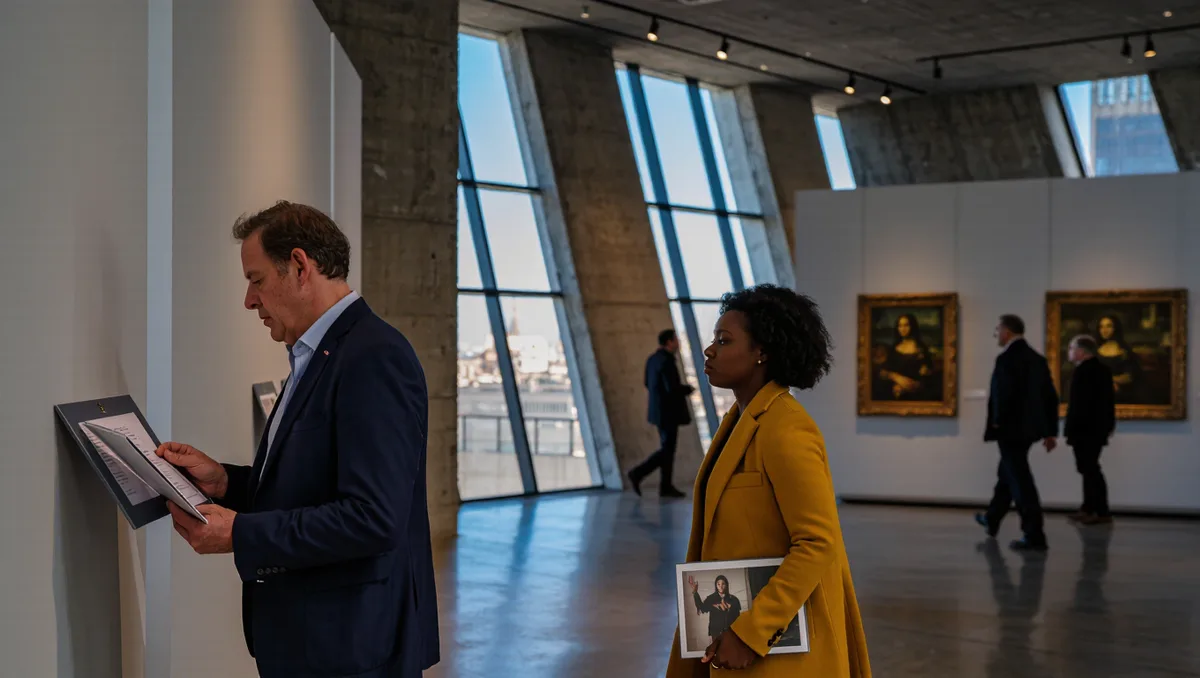
New york art galleries divide naturally by neighborhood, and that geography is the best place for a first-time visitor to start. Chelsea remains the city's densest concentration of large commercial galleries, while the Lower East Side, Tribeca and Bushwick each offer a smaller, walkable cluster with a distinct character. Pick one neighborhood per outing, check opening days before setting out, and a gallery day becomes manageable rather than a forced march.
The commercial gallery world differs from the museum world in one essential way: admission is free. Galleries exist to sell work, but nearly all of them welcome anyone who walks in, and no purchase or appointment is expected. That makes a gallery afternoon the cheapest serious art viewing in the city, and a useful complement to the museum visits covered elsewhere on this site.
This guide sets out what each of the four main districts offers, how to order a day's walk, and a few habits that separate a rewarding visit from a frustrating one. Readers who want museum-specific planning will find companion pieces on guides to the city's institutions; this piece sticks to the galleries.
Why start with one neighborhood?
Galleries keep shorter and less uniform hours than museums, and many close on Sundays and Mondays. Walking a district rather than crossing the city between scattered addresses means a visitor can see a dozen shows in an afternoon, on foot, without depending on timetables. It also means that if a particular space turns out to be between exhibitions — a common occurrence, since galleries rotate shows every few weeks — the loss is small. The neighborhood itself supplies the next stop.
There is a longer tradition behind the idea, too. According to Wikipedia, a guide is a person who leads travelers through unfamiliar locations, and the trade arose wherever visitors needed local knowledge they could not carry with them. A neighborhood plan does the same work on paper: it substitutes a map's local knowledge for a stranger's, and it keeps the day from dissolving into improvisation.
Chelsea: the heavyweight district
Chelsea, on the far west side of Manhattan around the high 20s streets between Tenth and Twelfth Avenues, is where the largest galleries cluster. Spaces here tend to be big, former industrial or warehouse buildings, and the shows often carry the weight of the international art trade: single-artist installations, museum-scale sculpture, photography of the kind that fills entire floors. A visitor can walk a loop of several blocks and step in and out of a dozen spaces in an afternoon.
The scale cuts both ways. The shows can be ambitious, but the district can feel imposing to a newcomer, and the blocks are long. Sensible practice is to pick three or four galleries in advance, note their addresses, and build the walk around them rather than trying to cover the district exhaustively. A fuller route, block by block, appears in the site's Chelsea gallery walk in one day.
The Lower East Side and Tribeca: smaller rooms, closer quarters
The Lower East Side holds a younger, smaller-scale gallery scene. Rooms are modest, shows change quickly, and the atmosphere is closer to a workshop than a showroom. The district's compactness is its virtue: a visitor can cover a surprising amount of ground in two hours, with coffee stops in between, and the surrounding streets are among the most pleasant in Manhattan for an unhurried walk. The site's Lower East Side galleries in a day sets out a workable order.
Tribeca, further downtown, has grown into a serious district in its own right, with galleries that relocated or opened satellites there over the past decade. The spaces skew mid-sized, the pace is calmer than Chelsea's, and the cast-iron architecture makes the walk between shows part of the pleasure. Readers planning a route there can follow the site's guide to the Tribeca galleries.
Bushwick: the outer-borough option
Bushwick, in northern Brooklyn, plays a different role in the city's gallery geography. It is known for artist-run spaces, warehouse studios and a rougher, more experimental register of shows, and it takes more effort to reach and to navigate: addresses are scattered, and some spaces keep irregular hours or open mainly on weekends. The reward is work that has not yet passed through the commercial filter, and a sense of how a large part of the city's artists actually live and produce.
A visitor heading out there should plan the day around a short list of confirmed-open spaces rather than expecting the Chelsea model of continuous foot traffic. The site's Bushwick art walk in one day covers the practicalities.
What this means for planning your first outing
Practical steps, in order:
- Choose one neighborhood and commit to it for the day.
- Check each gallery's own website for current hours and exhibition dates; hours change, and shows close between rotations.
- Aim for three to six galleries rather than a dozen. Attention fades; the sixth show usually registers better than the fifteenth.
- Walk in the order the map suggests, not the order of fame. Proximity beats reputation on a gallery day.
- Note what holds your attention. A small notebook or a phone photo of the wall label — where photography is permitted — is enough.
First-timers sometimes hesitate at the door, unsure whether they are welcome without intent to buy. They are. The ordinary courtesies are simple, and the site's gallery etiquette for first-timers sets them out plainly: look, ask questions if a staff member is free, and leave when the show has been seen.
Where to go from here
A gallery day and a museum day answer different questions. Museums offer depth and historical range; galleries offer the present tense — work made recently, shown close to where it was made or first sold. The strongest art habit in New York uses both. Readers ready to add the institutional side can start with the site's pieces on a first visit to MoMA or when the Met is free, and those following the city's public program can see how public art gets commissioned in New York.
The evidence for any specific show, however, is always the gallery's own current listing. Districts, distances and habits are durable; exhibitions are not. Check before you go, and treat this guide as the map rather than the itinerary.